COMPASS

Public resource

Diaphragm & Breathing

The way you breathe affects how you feel, move, think and recover. Good breathing supports your nervous system, can help reduce stress, and supports focus, posture and overall health.

Your diaphragm: your breathing powerhouse
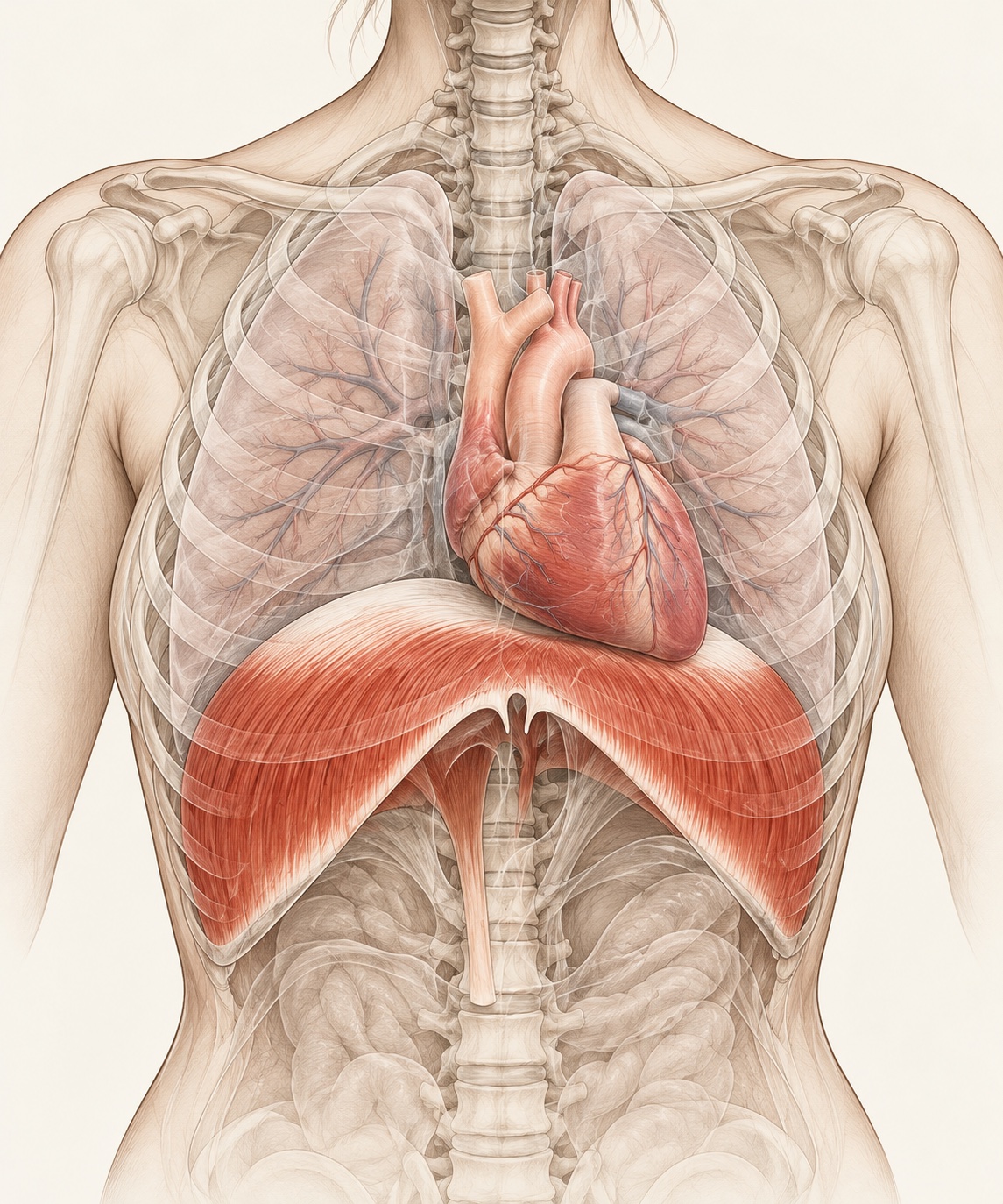
Front view anatomy drawing of the chest showing the dome-shaped diaphragm muscle in red beneath the lungs and heart, with the ribs and spine

The diaphragm is a dome-shaped muscle under your lungs. When it contracts, it moves down, creating space for your lungs to fill.

  • Supports healthy breathing
  • Helps regulate your nervous system
  • Massages your organs
  • Supports core stability and posture

What is diaphragmatic (tummy) breathing?

Diaphragmatic (tummy) breathing means breathing using your diaphragm, not just your chest. It should feel natural, quiet and effortless.

  • Nose in
  • Belly expands
  • Ribs widen
  • Slow, controlled exhale

How to practise tummy breathing
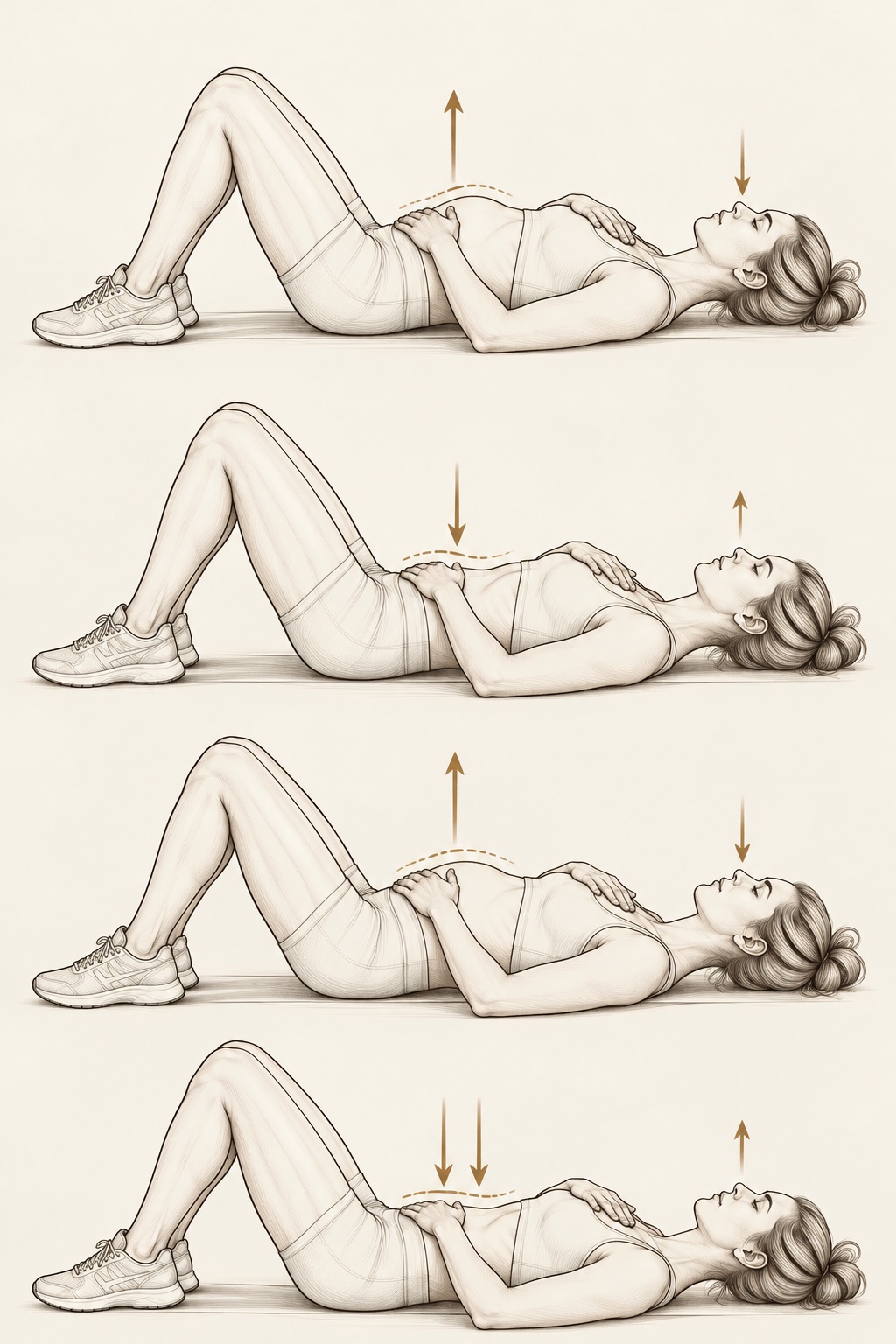
Four drawings of a person lying on their back, knees bent, one hand on the chest and one on the belly: the belly rises on the inhale, falls on the exhale, then the breath is repeated
  1. Lie on your back with your knees bent. Place one hand on your chest and one on your belly.
  2. Inhale slowly through your nose. Feel your belly rise.
  3. Exhale slowly through your nose or mouth. Feel your belly fall.
  4. Keep your chest relaxed and still.
  5. Repeat for 5–10 breaths.

Tip Imagine filling your belly like a balloon on the inhale, and letting the air out gently on the exhale.

Breathwork routines

Use these daily for stress relief, focus and nervous system regulation.

Calm & Reset (4–6 breath)

Great for stress and winding down.

Inhale 4 seconds

Exhale 6 seconds

Repeat 5–10 minutes

Balance & Focus (box breath)

Great for focus and emotional balance.

Pattern 4 seconds in, hold 4, out 4, hold 4

Repeat 5–10 minutes

Relax & Release (lengthened exhale)

Great for deep relaxation.

Inhale 4 seconds

Exhale 8 seconds

Repeat 5–10 minutes

Stress management essentials

  • Meditate daily. Even 5–10 minutes of mindfulness helps calm your nervous system.
  • Get outdoors. Natural light and fresh air boost mood, improve focus and support sleep quality.
  • Move your body. Daily movement reduces stress, releases tension and improves mental clarity.
  • Nourish yourself. Eat whole foods, stay hydrated and limit stimulants and processed sugars.
  • Prioritise sleep. Good sleep is essential for recovery, stress regulation and optimal health.
  • Connect. Spend time with people who lift you up. Connection is medicine.
  • Digital detox. Limit screen time and social media. Give your mind space to rest.

Why breathing matters

  • Activates the parasympathetic nervous system (rest and digest)
  • Can help lower stress, anxiety and tension
  • May support heart rate variability and healthy blood pressure
  • Supports focus, energy and mental clarity
  • Supports digestion, posture and core function
  • Supports sleep quality and recovery

Quick stress reset (2 minutes)

Use this any time you feel overwhelmed.

  1. Inhale through your nose for 4 seconds.
  2. Exhale slowly for 6–8 seconds.
  3. Repeat for 10–15 breaths.

Breathe. Reset. Respond.

When to seek help

If stress, anxiety or fatigue are persistent and affecting your daily life, don’t ignore it. Reach out to a healthcare professional for support.

Try it with a guide

Follow a paced breathing exercise in our Breathing tool, or see where stress may be showing up with the Stress Load Check.

General educational information from the practice — not personalised advice or a prescription. If anything is painful, stop. Book an appointment for guidance specific to you.

Ask Compass

Public resource

Diaphragm & Breathing

The way you breathe affects how you feel, move, think and recover. Good breathing supports your nervous system, can help reduce stress, and supports focus, posture and overall health.

Your diaphragm: your breathing powerhouse

Front view anatomy drawing of the chest showing the dome-shaped diaphragm muscle in red beneath the lungs and heart, with the ribs and spine

The diaphragm is a dome-shaped muscle under your lungs. When it contracts, it moves down, creating space for your lungs to fill.

  • Supports healthy breathing
  • Helps regulate your nervous system
  • Massages your organs
  • Supports core stability and posture

What is diaphragmatic (tummy) breathing?

Diaphragmatic (tummy) breathing means breathing using your diaphragm, not just your chest. It should feel natural, quiet and effortless.

  • Nose in
  • Belly expands
  • Ribs widen
  • Slow, controlled exhale

How to practise tummy breathing

Four drawings of a person lying on their back, knees bent, one hand on the chest and one on the belly: the belly rises on the inhale, falls on the exhale, then the breath is repeated
  1. Lie on your back with your knees bent. Place one hand on your chest and one on your belly.
  2. Inhale slowly through your nose. Feel your belly rise.
  3. Exhale slowly through your nose or mouth. Feel your belly fall.
  4. Keep your chest relaxed and still.
  5. Repeat for 5–10 breaths.

Tip Imagine filling your belly like a balloon on the inhale, and letting the air out gently on the exhale.

Breathwork routines

Use these daily for stress relief, focus and nervous system regulation.

Calm & Reset (4–6 breath)

Great for stress and winding down.

Inhale 4 seconds

Exhale 6 seconds

Repeat 5–10 minutes

Balance & Focus (box breath)

Great for focus and emotional balance.

Pattern 4 seconds in, hold 4, out 4, hold 4

Repeat 5–10 minutes

Relax & Release (lengthened exhale)

Great for deep relaxation.

Inhale 4 seconds

Exhale 8 seconds

Repeat 5–10 minutes

Stress management essentials

  • Meditate daily. Even 5–10 minutes of mindfulness helps calm your nervous system.
  • Get outdoors. Natural light and fresh air boost mood, improve focus and support sleep quality.
  • Move your body. Daily movement reduces stress, releases tension and improves mental clarity.
  • Nourish yourself. Eat whole foods, stay hydrated and limit stimulants and processed sugars.
  • Prioritise sleep. Good sleep is essential for recovery, stress regulation and optimal health.
  • Connect. Spend time with people who lift you up. Connection is medicine.
  • Digital detox. Limit screen time and social media. Give your mind space to rest.

Why breathing matters

  • Activates the parasympathetic nervous system (rest and digest)
  • Can help lower stress, anxiety and tension
  • May support heart rate variability and healthy blood pressure
  • Supports focus, energy and mental clarity
  • Supports digestion, posture and core function
  • Supports sleep quality and recovery

Quick stress reset (2 minutes)

Use this any time you feel overwhelmed.

  1. Inhale through your nose for 4 seconds.
  2. Exhale slowly for 6–8 seconds.
  3. Repeat for 10–15 breaths.

Breathe. Reset. Respond.

When to seek help

If stress, anxiety or fatigue are persistent and affecting your daily life, don’t ignore it. Reach out to a healthcare professional for support.

Try it with a guide

Follow a paced breathing exercise in our Breathing tool, or see where stress may be showing up with the Stress Load Check.

General educational information from the practice — not personalised advice or a prescription. If anything is painful, stop. Book an appointment for guidance specific to you.