COMPASS

Public resource

McGill Big 3

Three core stability and endurance exercises associated with Dr. Stuart McGill’s approach to building back resilience.

The McGill Big 3 are a set of three core stability and endurance exercises developed by spine biomechanist Dr. Stuart McGill to build back resilience and reduce lower back pain.

Recommended routine — Descending Pyramid Scheme

Perform repetitions with 10-second isometric holds using a 5-3-1 pattern:

  • 5 reps
  • 3 reps
  • 1 rep

Rest for 20 to 30 seconds between sets.

Frequency

Do them daily if managing back pain, or about 4 to 6 times a week for general core health and prevention.

Sources

As supplied by the practice — not all sources carry equal evidentiary weight.

  1. YouTube
  2. YouTube
  3. Petersen Physical Therapy
  4. SCS for LCS
  5. YouTube
  6. Refined Chiropractic
  7. Northern Nevada Chiropractic
  8. Squat University
  9. YouTube

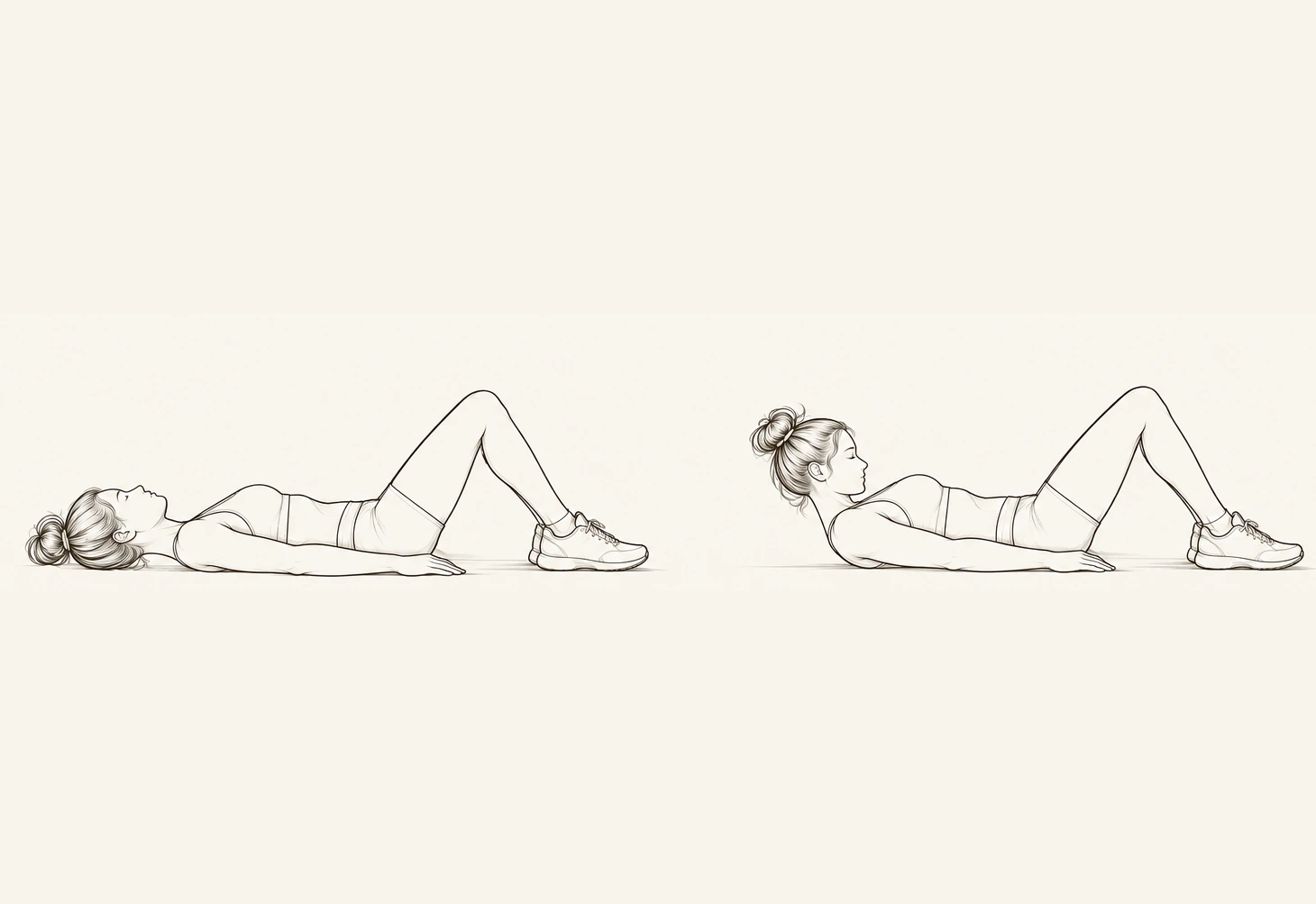
Modified Curl-Up

Editorial line-art illustration of the McGill Modified Curl-Up, start and top position
  1. Lie on your back with one knee bent and one leg straight, placing your hands under your lower back’s natural curve to keep it flat.
  2. Lift only your head and shoulders a few centimeters off the floor as a single unit without crunching the neck.
  3. Hold, then lower.

Suggested format 10-second hold · Part of the 5-3-1 descending pyramid — see the routine above.

Side Plank
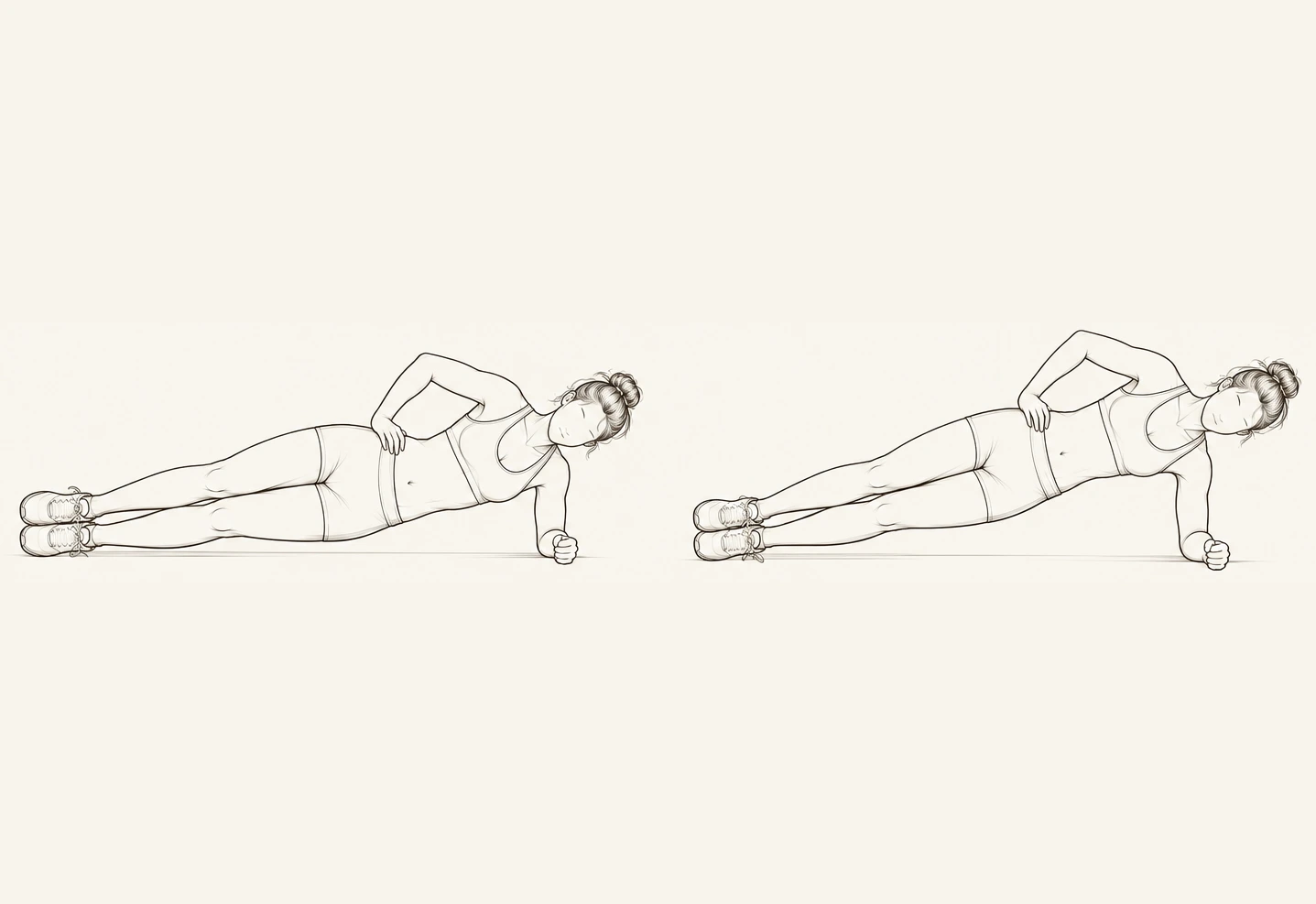
Editorial line-art illustration of the McGill Side Plank, elbow-down and raised position
  1. Lie on your side with your elbow directly under your shoulder and knees bent at 90 degrees.
  2. Lift your hips to form a straight line, brace your core, and hold.

Suggested format 10-second hold · Part of the 5-3-1 descending pyramid — see the routine above.

Bird Dog
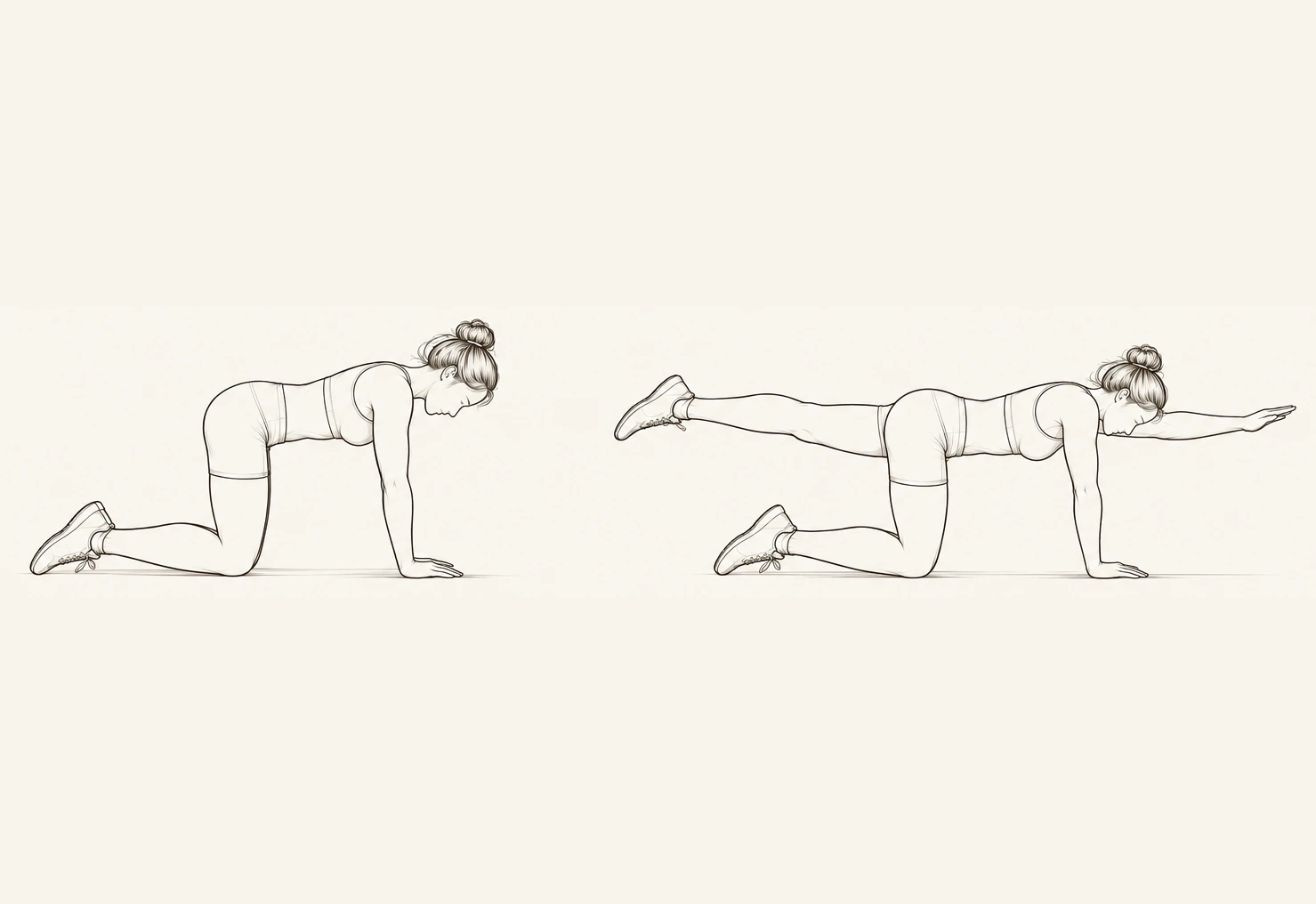
Editorial line-art illustration of Bird Dog: quadruped start and extended opposite arm/leg position
  1. Start on your hands and knees in a tabletop position.
  2. Extend your right arm forward and left leg back while keeping your spine completely stable and flat.
  3. Hold, then switch sides.

Suggested format 10-second hold each side · Part of the 5-3-1 descending pyramid — see the routine above.

General educational information from the practice — not personalised advice or a prescription. If anything is painful, stop. Book an appointment for guidance specific to you.

Ask Compass

Public resource

McGill Big 3

Three core stability and endurance exercises associated with Dr. Stuart McGill’s approach to building back resilience.

The McGill Big 3 are a set of three core stability and endurance exercises developed by spine biomechanist Dr. Stuart McGill to build back resilience and reduce lower back pain.

Recommended routine — Descending Pyramid Scheme

Perform repetitions with 10-second isometric holds using a 5-3-1 pattern:

  • 5 reps
  • 3 reps
  • 1 rep

Rest for 20 to 30 seconds between sets.

Frequency

Do them daily if managing back pain, or about 4 to 6 times a week for general core health and prevention.

Sources

As supplied by the practice — not all sources carry equal evidentiary weight.

  1. Petersen Physical Therapy
  2. SCS for LCS
  3. Refined Chiropractic
  4. Northern Nevada Chiropractic
  5. Squat University
  6. YouTube

Modified Curl-Up

Editorial line-art illustration of the McGill Modified Curl-Up, start and top position
  1. Lie on your back with one knee bent and one leg straight, placing your hands under your lower back’s natural curve to keep it flat.
  2. Lift only your head and shoulders a few centimeters off the floor as a single unit without crunching the neck.
  3. Hold, then lower.

Suggested format 10-second hold · Part of the 5-3-1 descending pyramid — see the routine above.

Side Plank

Editorial line-art illustration of the McGill Side Plank, elbow-down and raised position
  1. Lie on your side with your elbow directly under your shoulder and knees bent at 90 degrees.
  2. Lift your hips to form a straight line, brace your core, and hold.

Suggested format 10-second hold · Part of the 5-3-1 descending pyramid — see the routine above.

Bird Dog

Editorial line-art illustration of Bird Dog: quadruped start and extended opposite arm/leg position
  1. Start on your hands and knees in a tabletop position.
  2. Extend your right arm forward and left leg back while keeping your spine completely stable and flat.
  3. Hold, then switch sides.

Suggested format 10-second hold each side · Part of the 5-3-1 descending pyramid — see the routine above.

General educational information from the practice — not personalised advice or a prescription. If anything is painful, stop. Book an appointment for guidance specific to you.