COMPASS

Public resource

McKenzie Back Program

A stepwise progression of prone exercises for low back pain, followed by core strengthening.

Before you start

Perform the four exercises below in a stepwise progression. Progress to the next exercise only when the pain from the previous exercise decreases. If symptoms intensify (increased pain, numbness or tingling) in either or both legs, discontinue the exercise. If symptoms diminish in the legs, continue as instructed, even if this is accompanied by a temporary increase in low back pain.

Back extension progression

Step 1: Lying on your stomach
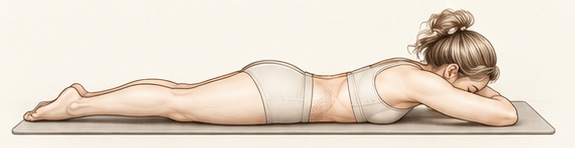
Drawing of a person lying on their stomach on a mat, head resting on the arms
  1. Lie on your stomach with your arms under your shoulders or down at your sides.
  2. Rest your head facing down or turned to one side.
  3. Take a deep breath and relax.

Hold 5 minutes

Frequency 1–2 times per day

Step 2: Lying on a pillow

  1. Lie on your stomach with your arms at your sides and a pillow placed directly under your chest.
  2. Rest your head facing down or turned to one side.
  3. Take a deep breath and relax.

Hold 5 minutes

Frequency 1–2 times per day

Step 3: Prone on elbows
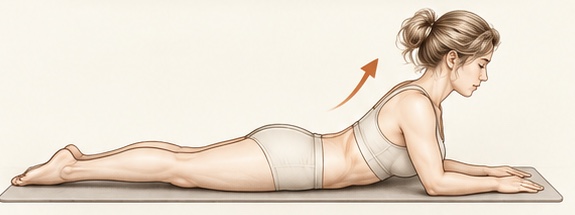
Drawing of a person lying on their stomach propped up on the forearms, with an arrow pointing upward
  1. Lie on your stomach and place your elbows under your shoulders so that you are resting on your forearms.
  2. Take a deep breath and relax.

Hold 30 seconds, repeat 10 times

Frequency 1–2 times per day

Step 4: Prone press-ups
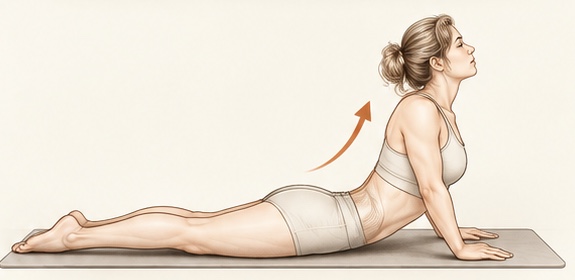
Drawing of a person lying on their stomach pressing up through straight arms, with an arrow pointing upward
  1. Lie on your stomach and place your hands under your shoulders.
  2. Slowly straighten your elbows, keeping your lower body relaxed, while raising your back upward as far as pain allows.

Hold 10 seconds, repeat 10 times

Frequency 1–2 times per day

Core strengthening

Find pelvic neutral first. It is your starting position for all of the core exercises.

Finding pelvic neutral
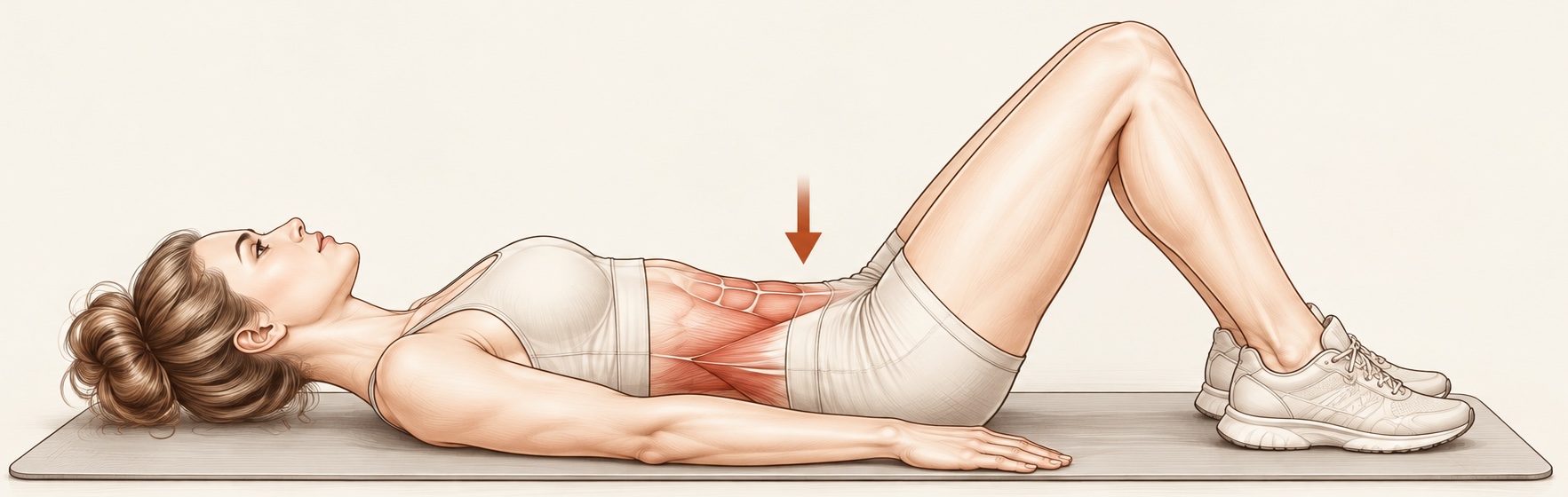
Drawing of a person lying on their back with knees bent, the low back flat against the mat and the lower abdominal muscles shaded, with an arrow showing the belly drawn in
  1. Tighten your abdominal muscles, draw your belly button in and flatten your back.
  2. Technique: hiss like a snake, or say the letter “S” — “sssssss”.
  3. Try to pull a towel out with your hand. A proper core contraction should prevent the towel from moving.
  4. This is your starting position for all of the core exercises.

Quadruped
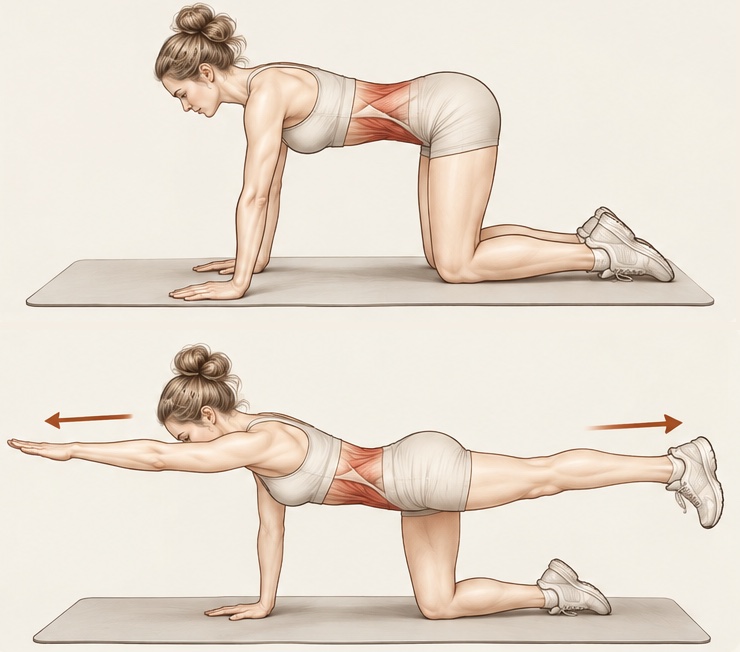
Two drawings of a person on hands and knees, then extending one arm forward and the opposite leg back, with the core muscles shaded
  1. Find pelvic neutral.
  2. Extend one arm and the opposite leg.
  3. Hold for 10 seconds, then change arms and legs.
  4. Keep your hips level and avoid arching your back.

Frequency 1 max set, once a day

Rationale Core control with movement

Prone plank
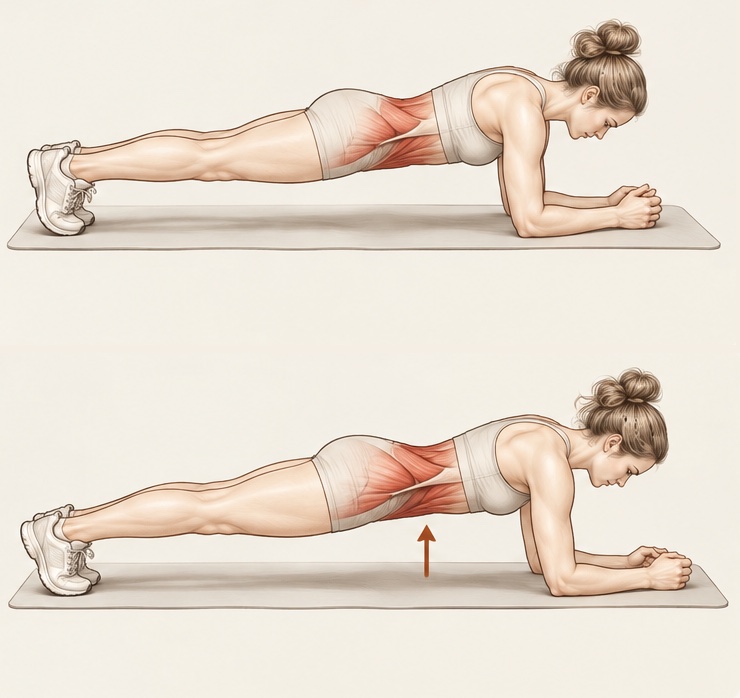
Two drawings of a person holding a plank on the forearms with a straight body line, with the core muscles shaded
  1. Find pelvic neutral.
  2. Balance on your elbows.
  3. Squeeze your glutes.
  4. Hold the position and avoid arching your back.

Frequency 1 max set, once a day

Goal Good: 2 minutes. Great: 3–5 minutes

Rationale Entire core muscles

Superman
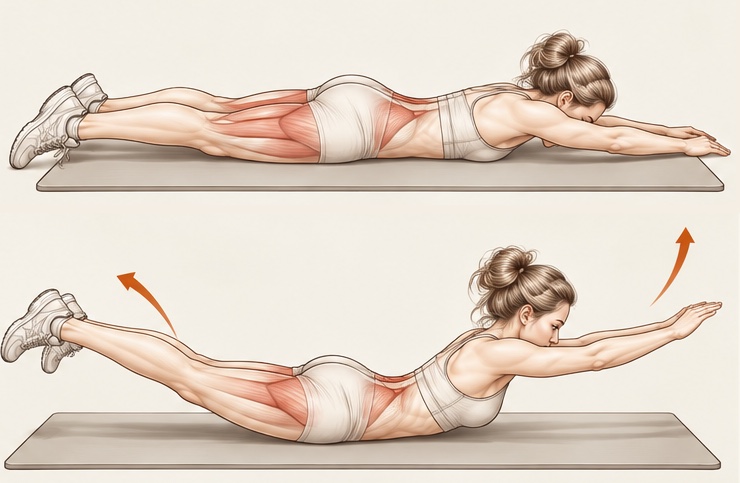
Two drawings of a person lying on their stomach with arms extended, then lifting the arms and legs off the mat, with the back and glute muscles shaded
  1. Lie on your stomach with your arms extended overhead.
  2. Lift your arms and legs, keeping your arms parallel to your ears.
  3. Hold the position for 10 seconds.
  4. Avoid excessive back extension.

Frequency 1 max set, once a day

Rationale Glutes, hamstrings and back muscles

Double leg bridge
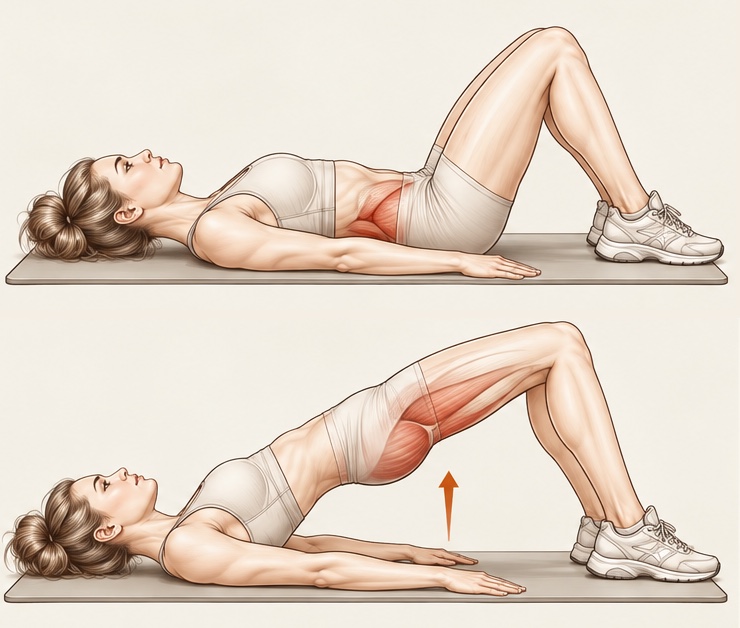
Two drawings of a person lying on their back with knees bent, then raising the hips toward the ceiling, with the glutes shaded
  1. Lie on your back with both knees bent to 90 degrees.
  2. Slowly raise your hips up toward the ceiling.
  3. Hold for 5 seconds.

Frequency 1 max set, once a day

Goal Increase gluteal strength

Source

Adapted from a back program handout from the UCSF Orthopaedic Institute, UCSF Medical Center Sports Medicine.

  1. UCSF Orthopaedic Institute

General educational information from the practice — not personalised advice or a prescription. If anything is painful, stop. Book an appointment for guidance specific to you.

Ask Compass

Public resource

McKenzie Back Program

A stepwise progression of prone exercises for low back pain, followed by core strengthening.

Before you start

Perform the four exercises below in a stepwise progression. Progress to the next exercise only when the pain from the previous exercise decreases. If symptoms intensify (increased pain, numbness or tingling) in either or both legs, discontinue the exercise. If symptoms diminish in the legs, continue as instructed, even if this is accompanied by a temporary increase in low back pain.

Back extension progression

Step 1: Lying on your stomach

Drawing of a person lying on their stomach on a mat, head resting on the arms
  1. Lie on your stomach with your arms under your shoulders or down at your sides.
  2. Rest your head facing down or turned to one side.
  3. Take a deep breath and relax.

Hold 5 minutes

Frequency 1–2 times per day

Step 2: Lying on a pillow

  1. Lie on your stomach with your arms at your sides and a pillow placed directly under your chest.
  2. Rest your head facing down or turned to one side.
  3. Take a deep breath and relax.

Hold 5 minutes

Frequency 1–2 times per day

Step 3: Prone on elbows

Drawing of a person lying on their stomach propped up on the forearms, with an arrow pointing upward
  1. Lie on your stomach and place your elbows under your shoulders so that you are resting on your forearms.
  2. Take a deep breath and relax.

Hold 30 seconds, repeat 10 times

Frequency 1–2 times per day

Step 4: Prone press-ups

Drawing of a person lying on their stomach pressing up through straight arms, with an arrow pointing upward
  1. Lie on your stomach and place your hands under your shoulders.
  2. Slowly straighten your elbows, keeping your lower body relaxed, while raising your back upward as far as pain allows.

Hold 10 seconds, repeat 10 times

Frequency 1–2 times per day

Core strengthening

Find pelvic neutral first. It is your starting position for all of the core exercises.

Finding pelvic neutral

Drawing of a person lying on their back with knees bent, the low back flat against the mat and the lower abdominal muscles shaded, with an arrow showing the belly drawn in
  1. Tighten your abdominal muscles, draw your belly button in and flatten your back.
  2. Technique: hiss like a snake, or say the letter “S” — “sssssss”.
  3. Try to pull a towel out with your hand. A proper core contraction should prevent the towel from moving.
  4. This is your starting position for all of the core exercises.

Quadruped

Two drawings of a person on hands and knees, then extending one arm forward and the opposite leg back, with the core muscles shaded
  1. Find pelvic neutral.
  2. Extend one arm and the opposite leg.
  3. Hold for 10 seconds, then change arms and legs.
  4. Keep your hips level and avoid arching your back.

Frequency 1 max set, once a day

Rationale Core control with movement

Prone plank

Two drawings of a person holding a plank on the forearms with a straight body line, with the core muscles shaded
  1. Find pelvic neutral.
  2. Balance on your elbows.
  3. Squeeze your glutes.
  4. Hold the position and avoid arching your back.

Frequency 1 max set, once a day

Goal Good: 2 minutes. Great: 3–5 minutes

Rationale Entire core muscles

Superman

Two drawings of a person lying on their stomach with arms extended, then lifting the arms and legs off the mat, with the back and glute muscles shaded
  1. Lie on your stomach with your arms extended overhead.
  2. Lift your arms and legs, keeping your arms parallel to your ears.
  3. Hold the position for 10 seconds.
  4. Avoid excessive back extension.

Frequency 1 max set, once a day

Rationale Glutes, hamstrings and back muscles

Double leg bridge

Two drawings of a person lying on their back with knees bent, then raising the hips toward the ceiling, with the glutes shaded
  1. Lie on your back with both knees bent to 90 degrees.
  2. Slowly raise your hips up toward the ceiling.
  3. Hold for 5 seconds.

Frequency 1 max set, once a day

Goal Increase gluteal strength

Source

Adapted from a back program handout from the UCSF Orthopaedic Institute, UCSF Medical Center Sports Medicine.

  1. UCSF Orthopaedic Institute

General educational information from the practice — not personalised advice or a prescription. If anything is painful, stop. Book an appointment for guidance specific to you.