COMPASS

Rehabilitation

Understanding TMJ & Jaw Function

A simple introduction to the jaw joint and everyday jaw habits · 4 min read
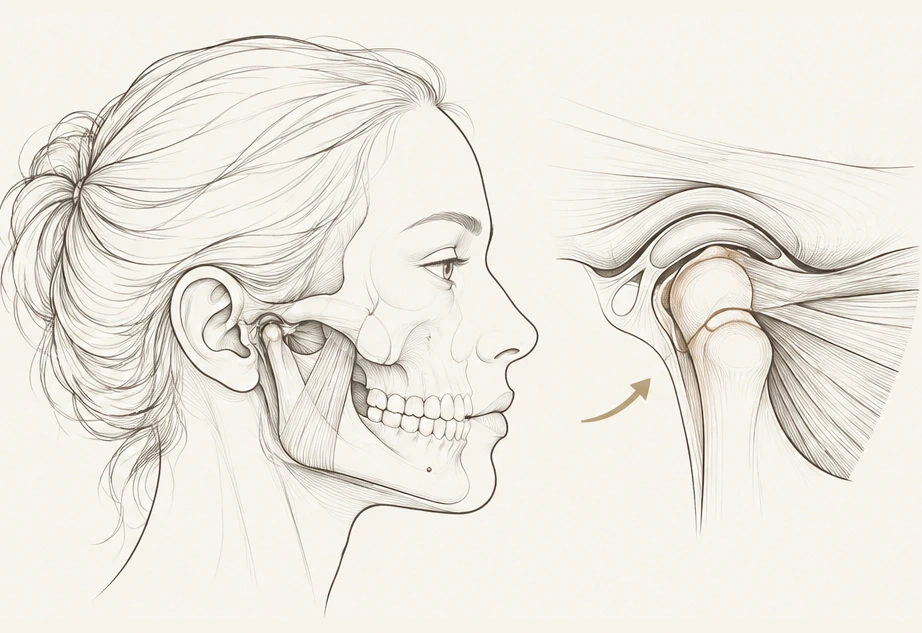
Editorial anatomical illustration of the jaw and temporomandibular joint (TMJ)

CLINICAL REVIEW REQUIRED

CONTENT REVIEW REQUIRED

The temporomandibular joints (TMJ) connect your lower jaw to your skull and work together with the surrounding muscles involved in chewing and jaw movement. This page is a general introduction — not an assessment of your own jaw.

What you’ll learn

  • What the TMJ is
  • How jaw function relates to the wider body
  • Everyday habits worth noticing
  • Gentle tongue posture
  • When to seek assessment

What is the TMJ?

The temporomandibular joints connect the lower jaw to the skull and work together with the muscles and surrounding structures involved in chewing and jaw movement.

Your jaw is part of a larger system

Jaw function does not happen in isolation. Jaw position, muscle activity and head and neck posture can all be relevant when considering how someone experiences jaw tension or discomfort.

Everyday habits to notice

A few everyday habits worth becoming aware of:

  • Clenching
  • Holding the teeth tightly together
  • Excessive jaw tension
  • Resting posture
  • Head and neck position

Tongue posture

Placing the tongue gently against the roof of the mouth may be relevant to jaw and oral posture, alongside lips resting gently closed and teeth resting slightly apart rather than clenched.

Forceful or prolonged tongue pressure — sometimes described as "hard mewing" — is not recommended as a public self-treatment strategy and may aggravate jaw muscle tension or clenching.

When to seek assessment

Persistent pain, significant clicking, locking, or difficulty moving the jaw are reasons to seek appropriate professional assessment rather than self-managing.

A simple takeaway

Think gentle, not forceful. Jaw function is about coordination, not pushing harder.

Related Essential
The information provided within these resources is intended for general educational purposes only. It is not intended to replace individual clinical assessment, diagnosis or professional healthcare advice. Information should be considered within the context of your individual circumstances, and you should seek appropriate professional advice where necessary.

Ask Compass

Rehabilitation

Understanding TMJ & Jaw Function

A simple introduction to the jaw joint and everyday jaw habits · 4 min read

Editorial anatomical illustration of the jaw and temporomandibular joint (TMJ)

CLINICAL REVIEW REQUIRED

CONTENT REVIEW REQUIRED

The temporomandibular joints (TMJ) connect your lower jaw to your skull and work together with the surrounding muscles involved in chewing and jaw movement. This page is a general introduction — not an assessment of your own jaw.

What you’ll learn

  • What the TMJ is
  • How jaw function relates to the wider body
  • Everyday habits worth noticing
  • Gentle tongue posture
  • When to seek assessment

What is the TMJ?

The temporomandibular joints connect the lower jaw to the skull and work together with the muscles and surrounding structures involved in chewing and jaw movement.

Your jaw is part of a larger system

Jaw function does not happen in isolation. Jaw position, muscle activity and head and neck posture can all be relevant when considering how someone experiences jaw tension or discomfort.

Everyday habits to notice

A few everyday habits worth becoming aware of:

  • Clenching
  • Holding the teeth tightly together
  • Excessive jaw tension
  • Resting posture
  • Head and neck position

Tongue posture

Placing the tongue gently against the roof of the mouth may be relevant to jaw and oral posture, alongside lips resting gently closed and teeth resting slightly apart rather than clenched.

Forceful or prolonged tongue pressure — sometimes described as "hard mewing" — is not recommended as a public self-treatment strategy and may aggravate jaw muscle tension or clenching.

When to seek assessment

Persistent pain, significant clicking, locking, or difficulty moving the jaw are reasons to seek appropriate professional assessment rather than self-managing.

A simple takeaway

Think gentle, not forceful. Jaw function is about coordination, not pushing harder.

Related Essential
The information provided within these resources is intended for general educational purposes only. It is not intended to replace individual clinical assessment, diagnosis or professional healthcare advice. Information should be considered within the context of your individual circumstances, and you should seek appropriate professional advice where necessary.