Public resource
Text Neck & Neck Posture
Small changes today, big impact tomorrow. The way we use our phones, computers and daily habits can place extra stress on the neck and upper back. Good posture, regular movement and targeted strengthening can help reduce strain and support long-term neck health.
What is text neck?
Text neck describes the strain placed on the neck and upper back by prolonged forward head posture, often from looking down at phones, tablets or screens.
Common signs
- Neck pain or stiffness
- Headaches, especially at the base of the skull
- Upper back or shoulder tension
- Fatigue or poor concentration
- Reduced range of motion
The impact of forward head posture
As your head tilts forward, the effective load on your neck increases. These are approximate figures from one biomechanical model, and the real load varies from person to person.
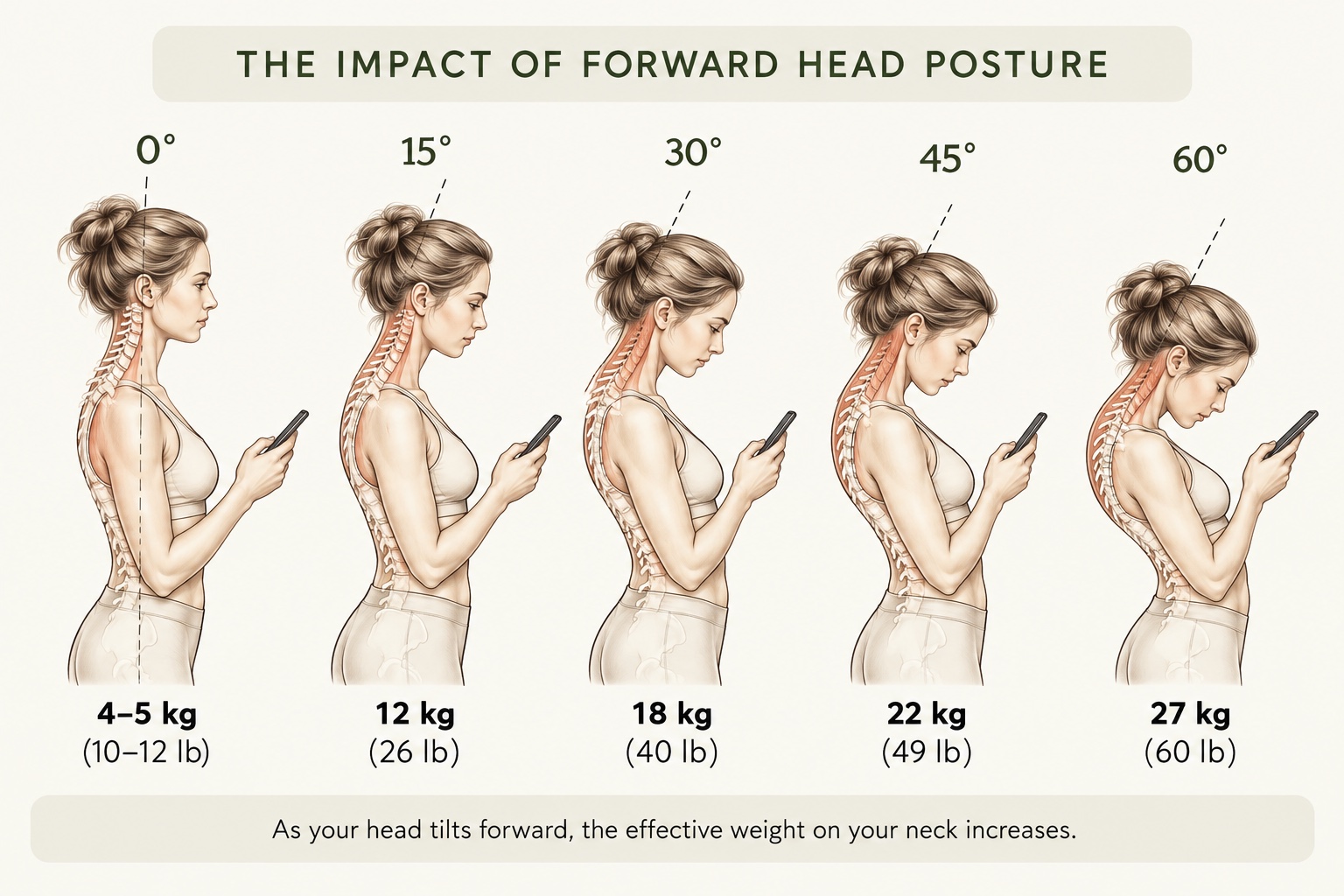
0° (upright) about 4–5 kg (10–12 lb)
15° about 12 kg (26 lb)
30° about 18 kg (40 lb)
45° about 22 kg (49 lb)
60° about 27 kg (60 lb)
What the research suggests
- Forward head posture increases the mechanical load on the neck and can contribute to pain and stiffness.
- Strengthening the deep neck flexors and upper back muscles can improve posture and may reduce pain.
- Regular movement breaks and ergonomic adjustments can help reduce neck strain.
- Exercise is recommended as part of a comprehensive approach to managing neck pain and improving function.
Six exercises to support neck posture
Do 2–3 sets of 8–15 repetitions (or 20–30 second holds), 3–5 times a week. Move gently and stop if anything is painful.
1. Chin tuck
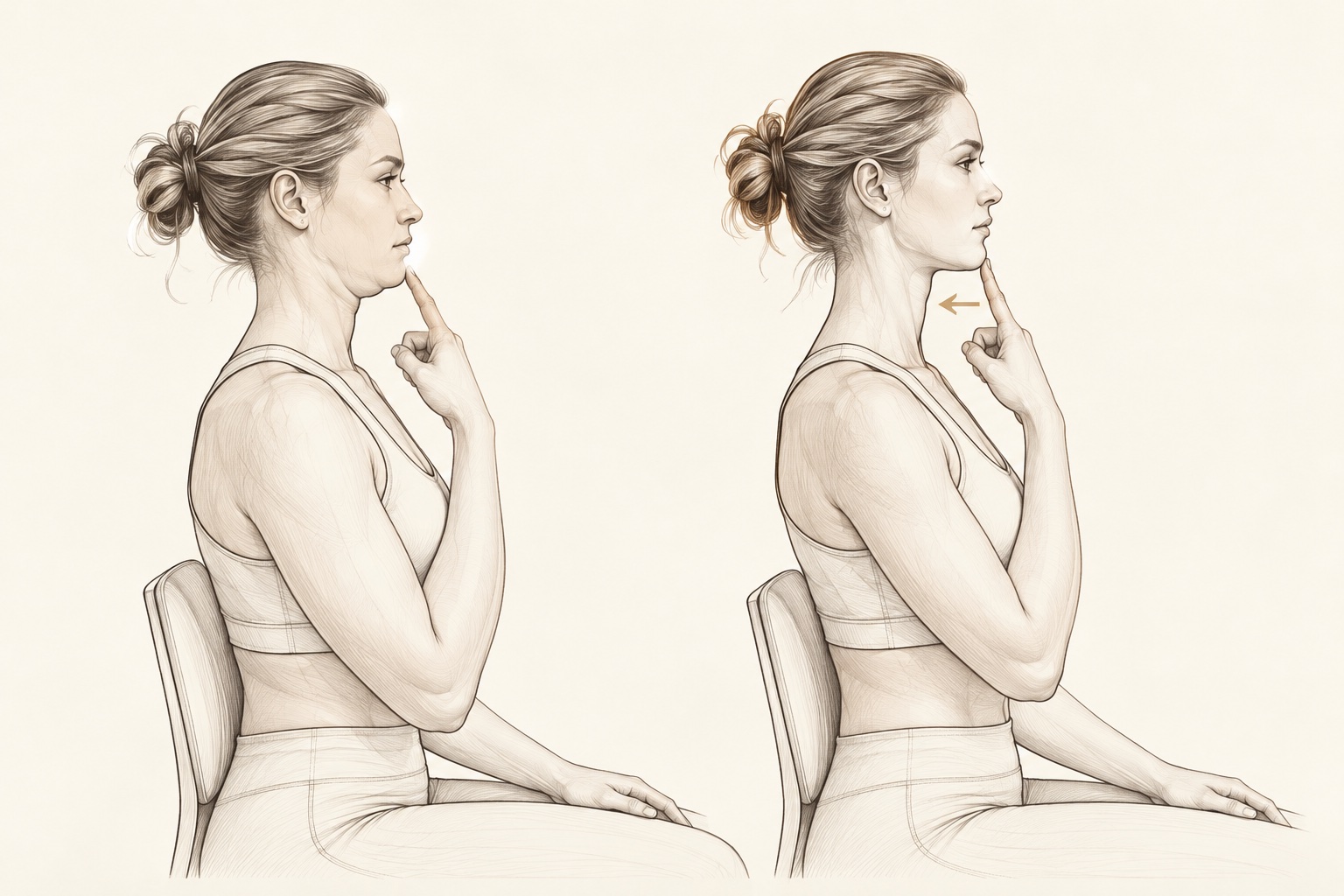
Gently draw your chin straight back (like making a double chin) and keep your head level. Hold, then relax.
Progression Add a 5–10 second hold.
2. Deep neck flexor hold
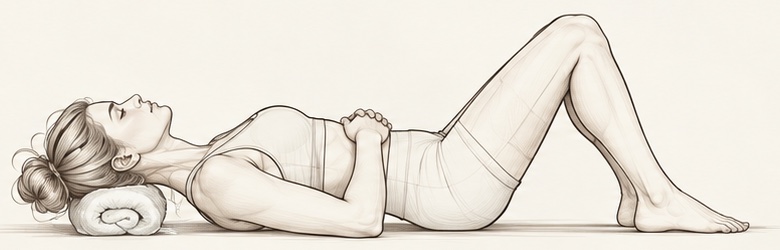
Lie on your back with a slight chin tuck. Subtly nod as if saying “yes”, and hold without lifting your head.
Progression Increase the hold time.
3. Scapular retractions
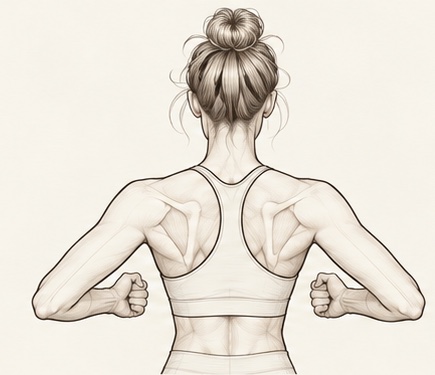
Sit or stand tall. Squeeze your shoulder blades back and down, and avoid shrugging.
Progression Add a resistance band.
4. Thoracic extension
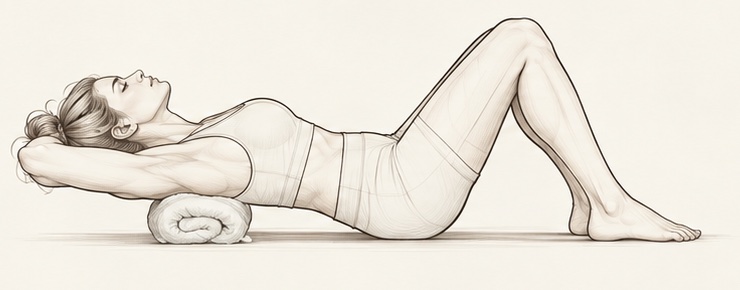
Support your mid-back on a foam roller or rolled towel and gently extend over it. Breathe and relax.
Progression Move the support to different levels of your upper back.
5. Upper trapezius stretch
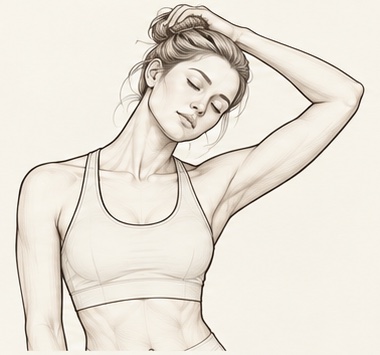
Sit tall and gently tilt your head to one side. Use your hand for light overpressure, hold, then repeat on the other side.
Progression Increase the hold time.
6. Chest & shoulder stretch
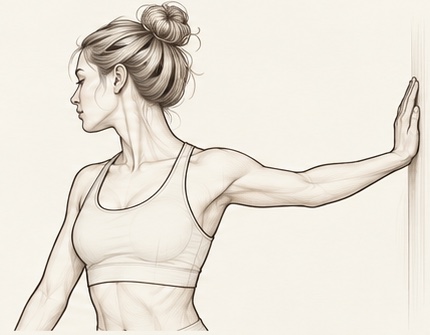
Open your chest by gently drawing your shoulders back. Hold and breathe, keeping your neck neutral.
Progression Step forward into the stretch.
Daily posture & movement habits
- Raise screens to eye level.
- Take a break every 30–45 minutes.
- Sit tall with support.
- Move often: walk, stretch and reset.
- Strengthen consistently.
- Support quality sleep and recovery.
Red flags: seek professional care if you experience
- Pain that spreads into the arm, hand or fingers
- Numbness, tingling or weakness
- Dizziness, visual changes or difficulty swallowing
- Pain following trauma or injury
- Symptoms that worsen or do not improve
The bottom line
Good neck posture is about awareness, movement and strength. Consistent daily habits combined with targeted exercises can help reduce strain, improve comfort and support long-term neck health.
Related
General educational information from the practice — not personalised advice or a prescription. If anything is painful, stop. Book an appointment for guidance specific to you.