COMPASS

Public resource

Ice or Heat? What the Research Says

People often ask whether to reach for ice or heat. The honest answer is that both are comfort measures, the research on each is limited, and the right choice depends on what is going on in the tissue. This guide sets out what the evidence supports, with the studies listed at the end.
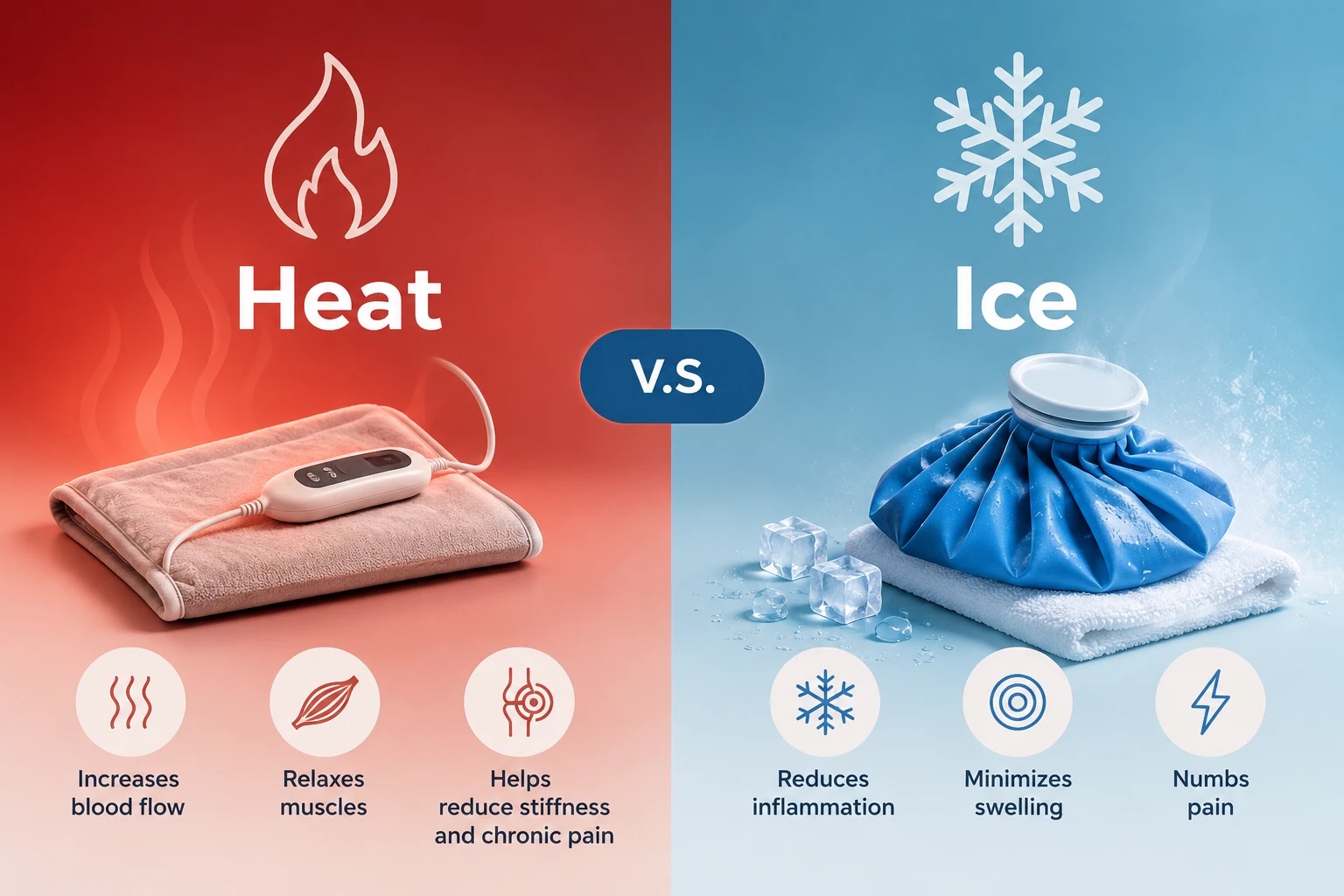
Heat versus ice: a heat pad that increases blood flow, relaxes muscles and helps reduce stiffness and chronic pain, beside an ice pack that reduces inflammation, minimizes swelling and numbs pain

The short answer

  • Ice. For comfort in the first day or two after a new injury that is swollen, or for a hot, irritated, flared-up area.
  • Heat. For stiffness, muscle tightness, spasm and sore muscles after exercise, and for acute low back pain, where heat wraps have the best trial support [1][3][4].
  • Neither. Is a cure. Both work best alongside movement and gradual loading, not instead of them.

A quick guide

  • New injury with swelling (first 24 to 72 hours). Ice for comfort, with compression and elevation. Avoid heat while the area is swollen and warm.
  • Muscle tightness, stiffness or spasm. Heat, followed by gentle movement.
  • Acute low back pain. A low-level heat wrap, together with staying active, has the best evidence [3][4].
  • Sore muscles one to two days after exercise. Heat wraps gave more pain relief than cold in the trials reviewed [1].
  • Long-standing aches and stiff joints. Many people find heat before activity helps them loosen up. Ice can ease a flare-up after activity.
  • Hot, red, swollen or very painful area. Ice for comfort, and get it checked, especially with fever or after a fall or injury.

What the research says about ice

  • A systematic review of 22 trials found marginal evidence that ice combined with exercise was most helpful, but the trials were of low quality and no best method or duration could be identified [2].
  • A later review concluded there was not enough evidence that cooling improves clinical outcomes in soft-tissue injury, and noted that excessive cooling can cause harm [8].
  • A 2021 review argues that the controversy is partly about timing, duration and the type of cooling used, and that some injury and recovery models show detrimental effects [5].
  • Newer frameworks such as POLICE and PEACE & LOVE treat ice as optional comfort care and put early gentle loading first [6][7].

What the research says about heat

  • A review of heat and cold therapy found that most recommendations rest on experience. Heat wraps had trial support for short-term pain and disability relief in acute low back pain, and gave more relief than cold for delayed-onset muscle soreness [1].
  • A Cochrane review of 9 trials (1,117 people) found that heat wraps reduced pain in acute and sub-acute low back pain in the short term, that adding exercise appeared to add benefit, and that the evidence for cold was too limited to judge [3].
  • In a randomised trial, continuous low-level heat wrap therapy gave more pain relief on day one than ibuprofen or acetaminophen in acute low back pain. The trial was single-blind and partly industry-linked, so the result should be read with caution [4].

Be realistic about the evidence

Most of these studies are small or of modest quality, and the authors of the reviews call for better trials. Treat ice and heat as ways to feel more comfortable while you keep moving, not as treatments that fix the problem.

How to use ice and heat safely

Simple, safe ways to use each. Check your skin often and stop if anything feels wrong.

1. Using ice
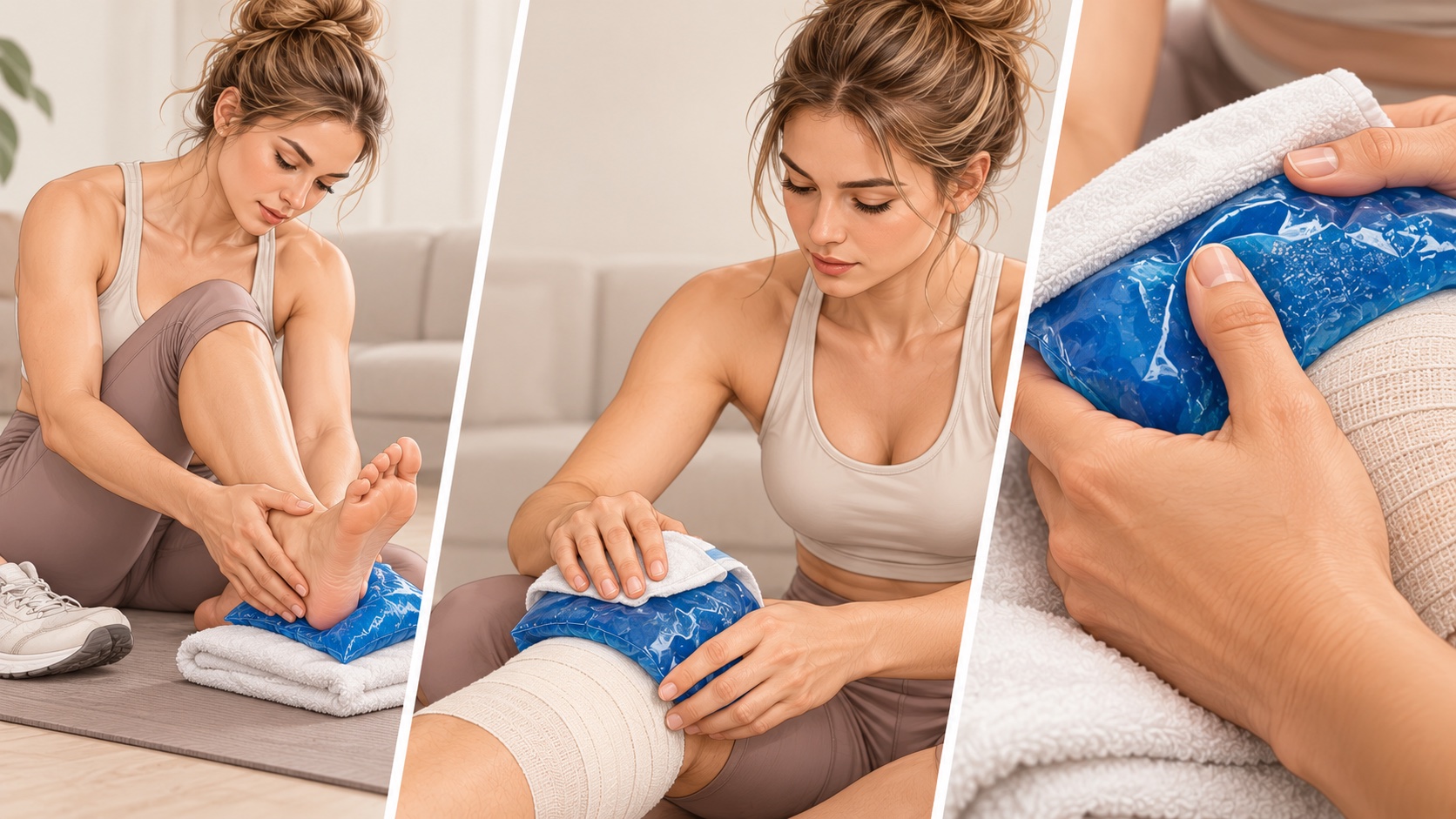
Three views of applying a wrapped gel cold pack to a foot and a bandaged knee

Wrap an ice pack or a bag of frozen peas in a thin damp cloth, never place it directly on bare skin, and rest it over the sore area.

Time 10–20 minutes

Frequency Every 2–3 hours for the first day or two

Stop if The skin turns very red, white, numb or painful.

2. Using heat

Use a warm (not hot) wheat bag, hot-water bottle in a cover, low-level heat wrap or a warm shower. Put a layer of cloth between the heat and your skin.

Time 15–20 minutes

Frequency Up to a few times a day

Stop if The skin looks blotchy or red, or feels sore or burning.

3. Warm up, then move

After a few minutes of heat, do gentle movements for the area, such as slow range of movement or easy walking. Movement is what turns the comfort into progress.

Time 5–10 minutes of movement

Aim Pain stays mild and settles within a day

4. Ice for a flare-up

If an area is hot, swollen or irritated after activity, a wrapped cold pack can ease it. Pair it with elevation and a few easy movements.

Time 10–15 minutes

Avoid Using ice straight before training or competition, as it can reduce feeling and control.

5. Know when not to use either

Do not use ice or heat over broken skin, or if you have reduced feeling, poor circulation, diabetes with nerve changes, or you cannot tell if it is too hot or cold. Take extra care in children, older adults and during pregnancy.

Tip Ask your chiropractor or doctor if you are not sure.

Red flags: get checked promptly

  • Burns, blisters or ongoing skin changes where ice or heat was used
  • Numbness, pins and needles, or a cold, pale limb
  • Warmth, spreading redness, swelling or fever
  • Calf pain and swelling in one leg, or chest pain or shortness of breath. Seek emergency care.
  • Back pain with leg weakness, numbness in the groin or changes in bladder or bowel control. Seek emergency care.
  • Pain after a fall or injury, or you cannot put weight on the limb
  • Severe night pain, or pain that is not improving after a few days

References

  1. Malanga GA, Yan N, Stark J. Mechanisms and efficacy of heat and cold therapies for musculoskeletal injury. Postgrad Med. 2015;127(1):57–65. Source
  2. Bleakley C, McDonough S, MacAuley D. The use of ice in the treatment of acute soft-tissue injury: a systematic review of randomized controlled trials. Am J Sports Med. 2004;32(1):251–261. Source
  3. French SD, Cameron M, Walker BF, Reggars JW, Esterman AJ. Superficial heat or cold for low back pain. Cochrane Database Syst Rev. 2006;(1):CD004750. Source
  4. Nadler SF, Steiner DJ, Erasala GN, et al. Continuous low-level heatwrap therapy provides more efficacy than ibuprofen and acetaminophen for acute low back pain. Spine. 2002;27(10):1012–1017. Source
  5. Kwiecien SY, McHugh MP. The cold truth: the role of cryotherapy in the treatment of injury and recovery from exercise. Eur J Appl Physiol. 2021;121(8):2125–2142. Source
  6. Bleakley CM, Glasgow P, MacAuley DC. PRICE needs updating, should we call the POLICE? Br J Sports Med. 2012;46(4):220–221. Source
  7. Dubois B, Esculier JF. Soft-tissue injuries simply need PEACE and LOVE. Br J Sports Med. 2020;54(2):72–73. Source
  8. Collins NC. Is ice right? Does cryotherapy improve outcome for acute soft tissue injury? Emerg Med J. 2008;25(2):65–68. Source

Related

General educational information from the practice — not personalised advice or a prescription. If anything is painful, stop. Book an appointment for guidance specific to you.

Ask Compass

Public resource

Ice or Heat? What the Research Says

People often ask whether to reach for ice or heat. The honest answer is that both are comfort measures, the research on each is limited, and the right choice depends on what is going on in the tissue. This guide sets out what the evidence supports, with the studies listed at the end.

Heat versus ice: a heat pad that increases blood flow, relaxes muscles and helps reduce stiffness and chronic pain, beside an ice pack that reduces inflammation, minimizes swelling and numbs pain

The short answer

  • Ice. For comfort in the first day or two after a new injury that is swollen, or for a hot, irritated, flared-up area.
  • Heat. For stiffness, muscle tightness, spasm and sore muscles after exercise, and for acute low back pain, where heat wraps have the best trial support [1][3][4].
  • Neither. Is a cure. Both work best alongside movement and gradual loading, not instead of them.

A quick guide

  • New injury with swelling (first 24 to 72 hours). Ice for comfort, with compression and elevation. Avoid heat while the area is swollen and warm.
  • Muscle tightness, stiffness or spasm. Heat, followed by gentle movement.
  • Acute low back pain. A low-level heat wrap, together with staying active, has the best evidence [3][4].
  • Sore muscles one to two days after exercise. Heat wraps gave more pain relief than cold in the trials reviewed [1].
  • Long-standing aches and stiff joints. Many people find heat before activity helps them loosen up. Ice can ease a flare-up after activity.
  • Hot, red, swollen or very painful area. Ice for comfort, and get it checked, especially with fever or after a fall or injury.

What the research says about ice

  • A systematic review of 22 trials found marginal evidence that ice combined with exercise was most helpful, but the trials were of low quality and no best method or duration could be identified [2].
  • A later review concluded there was not enough evidence that cooling improves clinical outcomes in soft-tissue injury, and noted that excessive cooling can cause harm [8].
  • A 2021 review argues that the controversy is partly about timing, duration and the type of cooling used, and that some injury and recovery models show detrimental effects [5].
  • Newer frameworks such as POLICE and PEACE & LOVE treat ice as optional comfort care and put early gentle loading first [6][7].

What the research says about heat

  • A review of heat and cold therapy found that most recommendations rest on experience. Heat wraps had trial support for short-term pain and disability relief in acute low back pain, and gave more relief than cold for delayed-onset muscle soreness [1].
  • A Cochrane review of 9 trials (1,117 people) found that heat wraps reduced pain in acute and sub-acute low back pain in the short term, that adding exercise appeared to add benefit, and that the evidence for cold was too limited to judge [3].
  • In a randomised trial, continuous low-level heat wrap therapy gave more pain relief on day one than ibuprofen or acetaminophen in acute low back pain. The trial was single-blind and partly industry-linked, so the result should be read with caution [4].

Be realistic about the evidence

Most of these studies are small or of modest quality, and the authors of the reviews call for better trials. Treat ice and heat as ways to feel more comfortable while you keep moving, not as treatments that fix the problem.

How to use ice and heat safely

Simple, safe ways to use each. Check your skin often and stop if anything feels wrong.

1. Using ice

Three views of applying a wrapped gel cold pack to a foot and a bandaged knee

Wrap an ice pack or a bag of frozen peas in a thin damp cloth, never place it directly on bare skin, and rest it over the sore area.

Time 10–20 minutes

Frequency Every 2–3 hours for the first day or two

Stop if The skin turns very red, white, numb or painful.

2. Using heat

Use a warm (not hot) wheat bag, hot-water bottle in a cover, low-level heat wrap or a warm shower. Put a layer of cloth between the heat and your skin.

Time 15–20 minutes

Frequency Up to a few times a day

Stop if The skin looks blotchy or red, or feels sore or burning.

3. Warm up, then move

After a few minutes of heat, do gentle movements for the area, such as slow range of movement or easy walking. Movement is what turns the comfort into progress.

Time 5–10 minutes of movement

Aim Pain stays mild and settles within a day

4. Ice for a flare-up

If an area is hot, swollen or irritated after activity, a wrapped cold pack can ease it. Pair it with elevation and a few easy movements.

Time 10–15 minutes

Avoid Using ice straight before training or competition, as it can reduce feeling and control.

5. Know when not to use either

Do not use ice or heat over broken skin, or if you have reduced feeling, poor circulation, diabetes with nerve changes, or you cannot tell if it is too hot or cold. Take extra care in children, older adults and during pregnancy.

Tip Ask your chiropractor or doctor if you are not sure.

Red flags: get checked promptly

  • Burns, blisters or ongoing skin changes where ice or heat was used
  • Numbness, pins and needles, or a cold, pale limb
  • Warmth, spreading redness, swelling or fever
  • Calf pain and swelling in one leg, or chest pain or shortness of breath. Seek emergency care.
  • Back pain with leg weakness, numbness in the groin or changes in bladder or bowel control. Seek emergency care.
  • Pain after a fall or injury, or you cannot put weight on the limb
  • Severe night pain, or pain that is not improving after a few days

References

  1. Malanga GA, Yan N, Stark J. Mechanisms and efficacy of heat and cold therapies for musculoskeletal injury. Postgrad Med. 2015;127(1):57–65. Source
  2. Bleakley C, McDonough S, MacAuley D. The use of ice in the treatment of acute soft-tissue injury: a systematic review of randomized controlled trials. Am J Sports Med. 2004;32(1):251–261. Source
  3. French SD, Cameron M, Walker BF, Reggars JW, Esterman AJ. Superficial heat or cold for low back pain. Cochrane Database Syst Rev. 2006;(1):CD004750. Source
  4. Nadler SF, Steiner DJ, Erasala GN, et al. Continuous low-level heatwrap therapy provides more efficacy than ibuprofen and acetaminophen for acute low back pain. Spine. 2002;27(10):1012–1017. Source
  5. Kwiecien SY, McHugh MP. The cold truth: the role of cryotherapy in the treatment of injury and recovery from exercise. Eur J Appl Physiol. 2021;121(8):2125–2142. Source
  6. Bleakley CM, Glasgow P, MacAuley DC. PRICE needs updating, should we call the POLICE? Br J Sports Med. 2012;46(4):220–221. Source
  7. Dubois B, Esculier JF. Soft-tissue injuries simply need PEACE and LOVE. Br J Sports Med. 2020;54(2):72–73. Source
  8. Collins NC. Is ice right? Does cryotherapy improve outcome for acute soft tissue injury? Emerg Med J. 2008;25(2):65–68. Source

Related

General educational information from the practice — not personalised advice or a prescription. If anything is painful, stop. Book an appointment for guidance specific to you.