COMPASS

Public resource

First Response to Injury: The PRICE Method

What you do in the first hours and days after a sprain, strain or bruise can shape how well you recover. PRICE (Protection, Rest, Ice, Compression, Elevation) is the long-standing first-response routine. It still helps, but the research has refined how to use it, especially around rest and ice.

What is PRICE?

  • Protection. Stop the activity and protect the injured area from further harm. Use a brace, sling, tape or crutches if needed.
  • Rest. Short, relative rest. Avoid what aggravates it, but keep moving the parts that do not hurt.
  • Ice. A cold pack wrapped in a cloth for 10 to 20 minutes, every two to three hours, mainly for pain relief in the first day or two.
  • Compression. A firm, not tight, elastic bandage from below the injury upwards to support the area and limit swelling.
  • Elevation. Raise the injured limb above the level of your heart when resting.
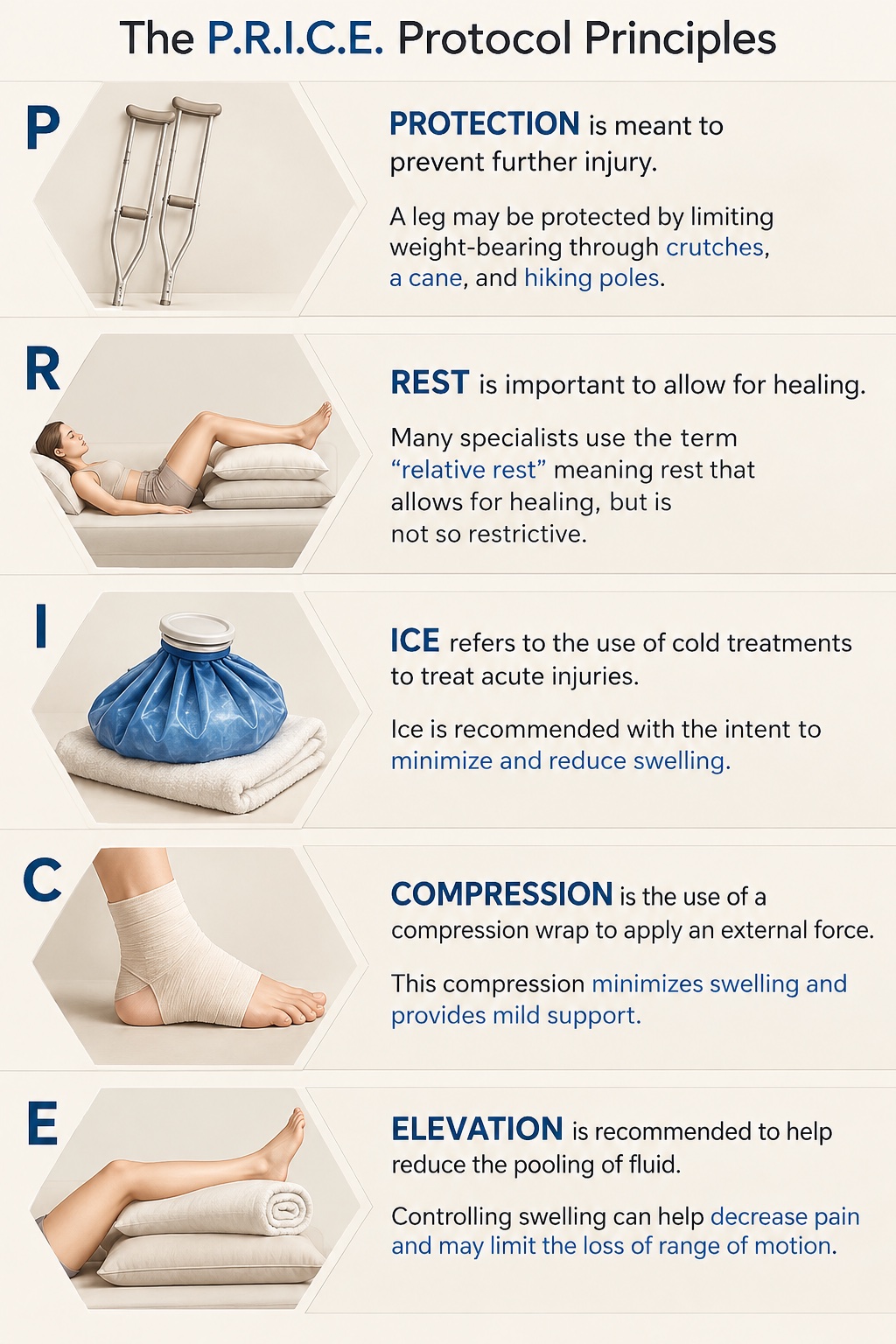
The P.R.I.C.E. protocol: protection with crutches, relative rest, ice, compression and elevation

Who it is for

PRICE suits sprains, strains, bruises and minor joint or overuse flare-ups. It is not for suspected fractures, dislocations, head, neck or spine injuries, chest pain, deep wounds or signs of infection. Those need prompt medical care.

What the research says

The evidence behind each step is not equal, and some of it has changed over time.

  • Rest. Prolonged rest can slow recovery and weaken tissue. Early, gentle, pain-limited movement and loading generally gives better results.
  • Ice. Cold can ease pain for a short time, but there is little high-quality evidence that it speeds healing. Use it for comfort, not as a treatment, and never place ice directly on bare skin.
  • Compression. It may reduce swelling and feels supportive. The evidence is modest, and the risk is low if the wrap is not too tight.
  • Elevation. Low risk and may help swelling, although direct evidence is limited.
  • Anti-inflammatory medicine. The evidence is mixed. These can ease pain but may interfere with healing in some tissues. Ask your pharmacist or doctor before using them.

Newer frameworks

Researchers have built on PRICE. POLICE replaces rest with optimal loading, meaning gentle, guided movement early on. PEACE & LOVE (2020) separates the first days from the weeks that follow.

  • PEACE (first days): Protect, Elevate, Avoid anti-inflammatories, Compress, Educate
  • LOVE (after): Load, Optimism, Vascularisation (pain-free aerobic exercise), Exercise

A practical first 72 hours

  1. Within the first hours: stop, protect the area, compress and elevate, and use ice for comfort if it helps.
  2. Same day: begin gentle, pain-free movement of the joint, and put weight through the limb only as comfort allows.
  3. Day two to three: walk more, start light muscle holds, and ease off the bandage when swelling settles.
  4. From day three: add progressive loading as pain allows. If you are not clearly improving by days three to five, get assessed.

First-response actions and early movement

These are early actions, not a full rehab programme. Stay within mild discomfort and stop if pain sharpens.

1. Apply a compression wrap

Start a few centimetres below the injury and wrap upwards in overlapping turns, firm but not tight. Check your toes or fingers for numbness, tingling, colour change or throbbing, and loosen the wrap if you notice any.

Duration Day and evening, removed for sleep

Check Every hour at first

2. Elevate the limb

Rest with the injured area above heart level, for example lying with your leg on pillows.

Time 15–20 minutes, several times a day

3. Cold pack for comfort
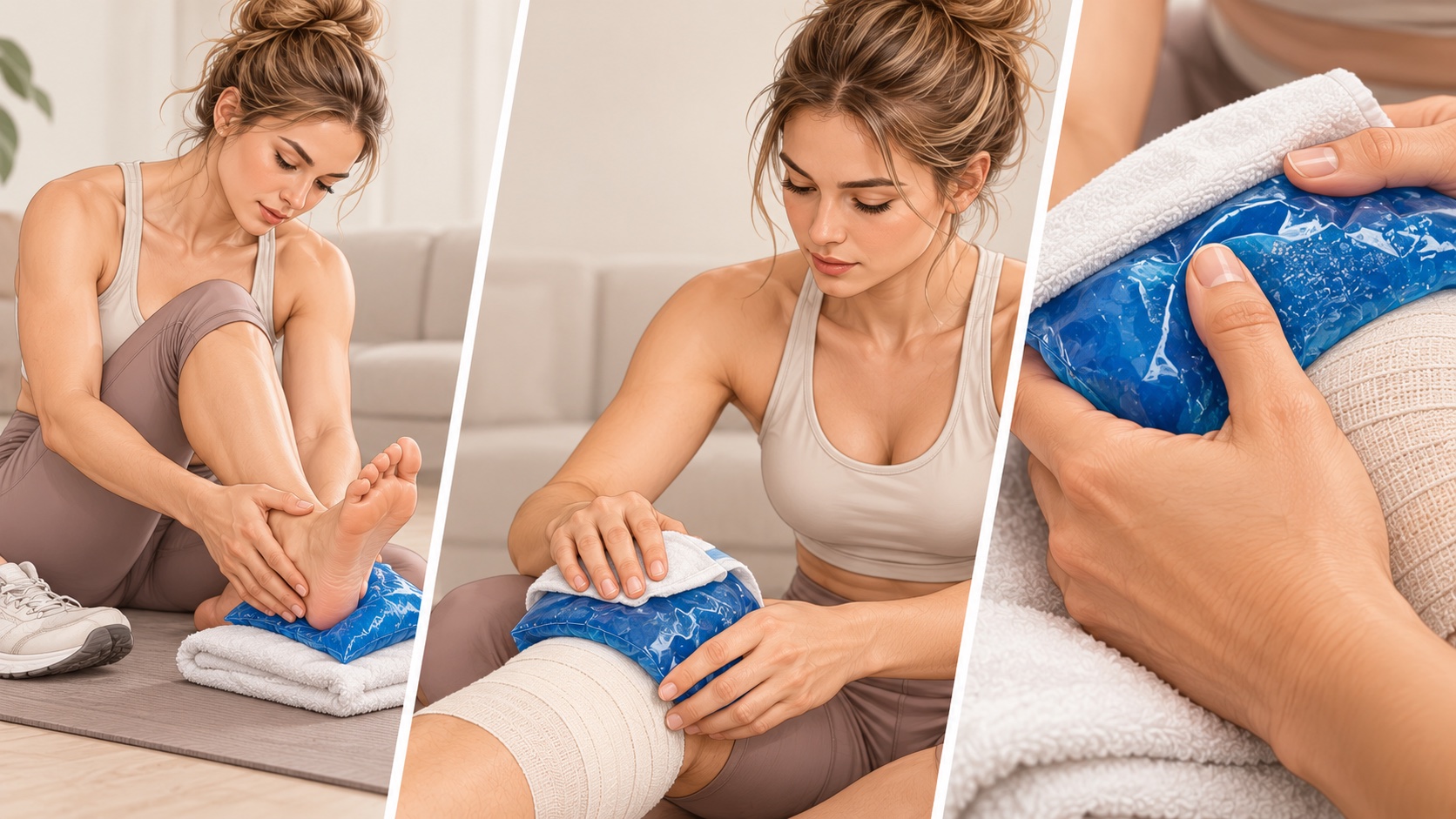
Three views of applying a wrapped gel cold pack to a foot and a bandaged knee

Wrap a cold pack in a thin cloth and place it over the area. Stop if the skin becomes very red, numb or painful.

Time 10–20 minutes

Frequency Every 2–3 hours for the first day or two

4. Gentle pain-free range of movement

Move the joint slowly through the range that feels comfortable, such as drawing the alphabet with your foot for an ankle.

Reps 10–15

Frequency Every hour or two while awake

5. Light muscle hold (isometric)

Tighten the muscles around the injury without moving the joint, using about a third to half of your effort.

Hold 10 seconds

Reps 5

Progression Increase the effort as comfort allows.

Red flags: get checked promptly

  • You cannot put weight on the limb or take four steps
  • Pain pressed directly over a bone, or a visibly crooked or deformed joint
  • Numbness, pins and needles, a cold or pale limb, or a rapidly growing swelling
  • Warmth, spreading redness or a fever
  • Any head, neck or back injury, dizziness, confusion or loss of consciousness
  • Calf pain and swelling without an injury, or chest pain or shortness of breath. Seek emergency care.
  • No clear improvement after three to five days, or the same injury keeps returning

References

This guide draws on the published sources below. They are listed for further reading and do not replace an assessment.

  1. Bleakley CM, Glasgow P, MacAuley DC. PRICE needs updating, should we call the POLICE? Br J Sports Med. 2012;46(4):220–221. Source
  2. Dubois B, Esculier JF. Soft-tissue injuries simply need PEACE and LOVE. Br J Sports Med. 2020;54(2):72–73. Source
  3. Bleakley C, McDonough S, MacAuley D. The use of ice in the treatment of acute soft-tissue injury: a systematic review of randomized controlled trials. Am J Sports Med. 2004;32(1):251–261. Source
  4. Collins NC. Is ice right? Does cryotherapy improve outcome for acute soft tissue injury? Emerg Med J. 2008;25(2):65–68. Source
  5. Bleakley CM, O’Connor SR, Tully MA, et al. Effect of accelerated rehabilitation on function after ankle sprain: randomised controlled trial. BMJ. 2010;340:c1964. Source
  6. Stiell IG, Greenberg GH, McKnight RD, et al. Decision rules for the use of radiography in acute ankle injuries: refinement and prospective validation. JAMA. 1993;269(9):1127–1132. Source

Related

General educational information from the practice — not personalised advice or a prescription. If anything is painful, stop. Book an appointment for guidance specific to you.

Ask Compass

Public resource

First Response to Injury: The PRICE Method

What you do in the first hours and days after a sprain, strain or bruise can shape how well you recover. PRICE (Protection, Rest, Ice, Compression, Elevation) is the long-standing first-response routine. It still helps, but the research has refined how to use it, especially around rest and ice.

What is PRICE?

  • Protection. Stop the activity and protect the injured area from further harm. Use a brace, sling, tape or crutches if needed.
  • Rest. Short, relative rest. Avoid what aggravates it, but keep moving the parts that do not hurt.
  • Ice. A cold pack wrapped in a cloth for 10 to 20 minutes, every two to three hours, mainly for pain relief in the first day or two.
  • Compression. A firm, not tight, elastic bandage from below the injury upwards to support the area and limit swelling.
  • Elevation. Raise the injured limb above the level of your heart when resting.
The P.R.I.C.E. protocol: protection with crutches, relative rest, ice, compression and elevation

Who it is for

PRICE suits sprains, strains, bruises and minor joint or overuse flare-ups. It is not for suspected fractures, dislocations, head, neck or spine injuries, chest pain, deep wounds or signs of infection. Those need prompt medical care.

What the research says

The evidence behind each step is not equal, and some of it has changed over time.

  • Rest. Prolonged rest can slow recovery and weaken tissue. Early, gentle, pain-limited movement and loading generally gives better results.
  • Ice. Cold can ease pain for a short time, but there is little high-quality evidence that it speeds healing. Use it for comfort, not as a treatment, and never place ice directly on bare skin.
  • Compression. It may reduce swelling and feels supportive. The evidence is modest, and the risk is low if the wrap is not too tight.
  • Elevation. Low risk and may help swelling, although direct evidence is limited.
  • Anti-inflammatory medicine. The evidence is mixed. These can ease pain but may interfere with healing in some tissues. Ask your pharmacist or doctor before using them.

Newer frameworks

Researchers have built on PRICE. POLICE replaces rest with optimal loading, meaning gentle, guided movement early on. PEACE & LOVE (2020) separates the first days from the weeks that follow.

  • PEACE (first days): Protect, Elevate, Avoid anti-inflammatories, Compress, Educate
  • LOVE (after): Load, Optimism, Vascularisation (pain-free aerobic exercise), Exercise

A practical first 72 hours

  1. Within the first hours: stop, protect the area, compress and elevate, and use ice for comfort if it helps.
  2. Same day: begin gentle, pain-free movement of the joint, and put weight through the limb only as comfort allows.
  3. Day two to three: walk more, start light muscle holds, and ease off the bandage when swelling settles.
  4. From day three: add progressive loading as pain allows. If you are not clearly improving by days three to five, get assessed.

First-response actions and early movement

These are early actions, not a full rehab programme. Stay within mild discomfort and stop if pain sharpens.

1. Apply a compression wrap

Start a few centimetres below the injury and wrap upwards in overlapping turns, firm but not tight. Check your toes or fingers for numbness, tingling, colour change or throbbing, and loosen the wrap if you notice any.

Duration Day and evening, removed for sleep

Check Every hour at first

2. Elevate the limb

Rest with the injured area above heart level, for example lying with your leg on pillows.

Time 15–20 minutes, several times a day

3. Cold pack for comfort

Three views of applying a wrapped gel cold pack to a foot and a bandaged knee

Wrap a cold pack in a thin cloth and place it over the area. Stop if the skin becomes very red, numb or painful.

Time 10–20 minutes

Frequency Every 2–3 hours for the first day or two

4. Gentle pain-free range of movement

Move the joint slowly through the range that feels comfortable, such as drawing the alphabet with your foot for an ankle.

Reps 10–15

Frequency Every hour or two while awake

5. Light muscle hold (isometric)

Tighten the muscles around the injury without moving the joint, using about a third to half of your effort.

Hold 10 seconds

Reps 5

Progression Increase the effort as comfort allows.

Red flags: get checked promptly

  • You cannot put weight on the limb or take four steps
  • Pain pressed directly over a bone, or a visibly crooked or deformed joint
  • Numbness, pins and needles, a cold or pale limb, or a rapidly growing swelling
  • Warmth, spreading redness or a fever
  • Any head, neck or back injury, dizziness, confusion or loss of consciousness
  • Calf pain and swelling without an injury, or chest pain or shortness of breath. Seek emergency care.
  • No clear improvement after three to five days, or the same injury keeps returning

References

This guide draws on the published sources below. They are listed for further reading and do not replace an assessment.

  1. Bleakley CM, Glasgow P, MacAuley DC. PRICE needs updating, should we call the POLICE? Br J Sports Med. 2012;46(4):220–221. Source
  2. Dubois B, Esculier JF. Soft-tissue injuries simply need PEACE and LOVE. Br J Sports Med. 2020;54(2):72–73. Source
  3. Bleakley C, McDonough S, MacAuley D. The use of ice in the treatment of acute soft-tissue injury: a systematic review of randomized controlled trials. Am J Sports Med. 2004;32(1):251–261. Source
  4. Collins NC. Is ice right? Does cryotherapy improve outcome for acute soft tissue injury? Emerg Med J. 2008;25(2):65–68. Source
  5. Bleakley CM, O’Connor SR, Tully MA, et al. Effect of accelerated rehabilitation on function after ankle sprain: randomised controlled trial. BMJ. 2010;340:c1964. Source
  6. Stiell IG, Greenberg GH, McKnight RD, et al. Decision rules for the use of radiography in acute ankle injuries: refinement and prospective validation. JAMA. 1993;269(9):1127–1132. Source

Related

General educational information from the practice — not personalised advice or a prescription. If anything is painful, stop. Book an appointment for guidance specific to you.