COMPASS

Public resource

Understanding stress

How everyday stress builds up in the body, why recovery matters, and what you can do about it.

Stress isn’t always the enemy

Some stress is useful. A deadline, a workout or a new challenge can sharpen your focus and help you perform. The problems start when stress is constant and recovery doesn’t catch up.

  • Too little stress (underload) can leave you flat, low in morale and fatigued.
  • Healthy stress keeps you focused and motivated, and you recover well afterwards.
  • Too much stress (overload) leads to exhaustion and, eventually, breakdown.

Two words worth knowing

Allostasis

Your body’s way of staying steady while things change. When something stressful happens, your body adjusts — heart rate, hormones, energy supply — and then settles again.

Think of it like

A thermostat. When the room gets cold, the heating switches on. When it warms up, the heating switches off again. Your body keeps adjusting like this all day, so that everything stays in a comfortable range.

Allostatic load

The wear and tear that builds up when your body has to keep adjusting without enough time to recover. It is the accumulated strain of ongoing stress.

Think of it like

A car that is revved hard every day and never gets serviced. Any single rev is fine. It is the wear from thousands of revs, with no pit stop, that adds up.

Resilience

How well you adapt and bounce back. A resilient body adjusts to a stressor and returns to balance. When recovery falls behind, the load builds.

Think of it like

A tree in the wind. A flexible tree bends in a storm and springs back. A stiff, worn-out one is more likely to snap.

Whether something feels stressful depends on your past experiences, your genetics and your habits. That’s why the same event affects people so differently.

What happens in your body

Think of it like

A smoke alarm and a sprinkler system. The alarm (your brain) senses danger and the sprinklers (your adrenal glands) switch on. That is exactly what you want in a fire. It becomes a problem if the alarm keeps going off when there is no fire.

  1. Your brain senses a threat or a demand, real or perceived.
  2. Signals travel from the brain (the hypothalamus and pituitary) to the adrenal glands.
  3. The adrenal glands release stress hormones, including adrenaline and cortisol.
  4. Your heart rate, breathing and blood sugar rise, ready for action.
  5. When the demand passes, the system should switch off and recovery begins.

Cortisol

A hormone that helps you cope with demands. It raises your energy, sharpens your alertness and keeps inflammation in check.

Think of it like

A night watchman. Great when on duty during a threat, but exhausting if he is never allowed to go off shift.

Cortisol helps you cope in the short term. The trouble starts when the stress response stays switched on, or its daily rhythm stays off, for a long time. Long-term stress is linked to inflammation, poorer sleep, digestive upset, and changes in blood pressure and blood sugar.
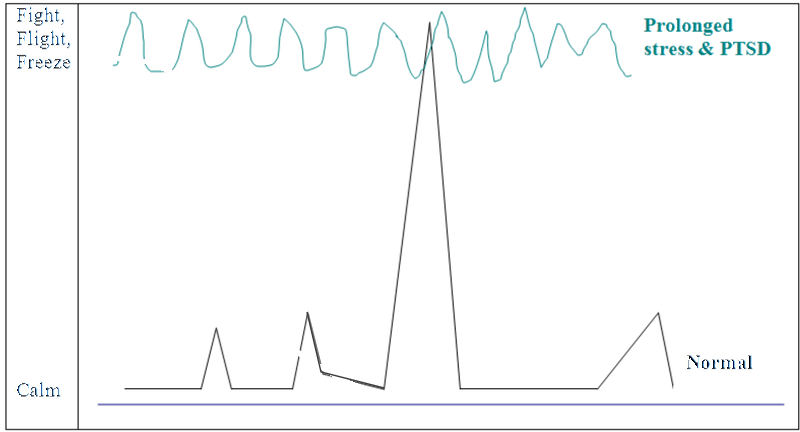
Graph comparing normal stress, with short peaks that return to calm, against prolonged stress, which stays in a constantly heightened fight, flight or freeze state
Normal stress rises and settles back to calm. With prolonged stress, the body stays in a heightened state.

How stress load can show up

Stress load doesn’t look the same in everyone. Common signs include:

  • Feeling wired, anxious, irritable or overwhelmed
  • Trouble concentrating, or feeling flat and unmotivated
  • Clenching or grinding your jaw, and tense neck and shoulders
  • Headaches
  • Digestive upset, or changes in appetite
  • Trouble falling or staying asleep, or waking tired
  • Cravings and energy crashes through the day
  • Getting sick more often than usual

These signs have many possible causes, and none of them diagnoses stress on its own.

How it is measured

Clinicians and researchers look at several things together: blood pressure and resting heart rate, waist-to-hip ratio, blood sugar and cholesterol, markers of inflammation such as CRP, and stress hormones such as cortisol. Questionnaires about symptoms add the picture. The more of these that are out of range, the higher the load is likely to be.

The three states of your nervous system

The polyvagal framework describes three broad states your nervous system moves between. It is normal to shift between them. The aim is to spend most of your time in the first.

Think of it like

Driving a car. Rest and connect is cruising along comfortably. Fight or flight is flooring the accelerator. Freeze is the engine stalling, or the handbrake being left on. A healthy driver uses all three at times, but spends most of the journey cruising.

  • Rest and connect (social engagement): you feel calm, curious and present. Digestion, immunity and recovery work well.
  • Fight or flight: you feel anxious, irritable, angry or panicky. Heart rate, blood pressure and muscle tension rise, and digestion slows.
  • Freeze (shut-down): you feel numb, hopeless, disconnected or exhausted.
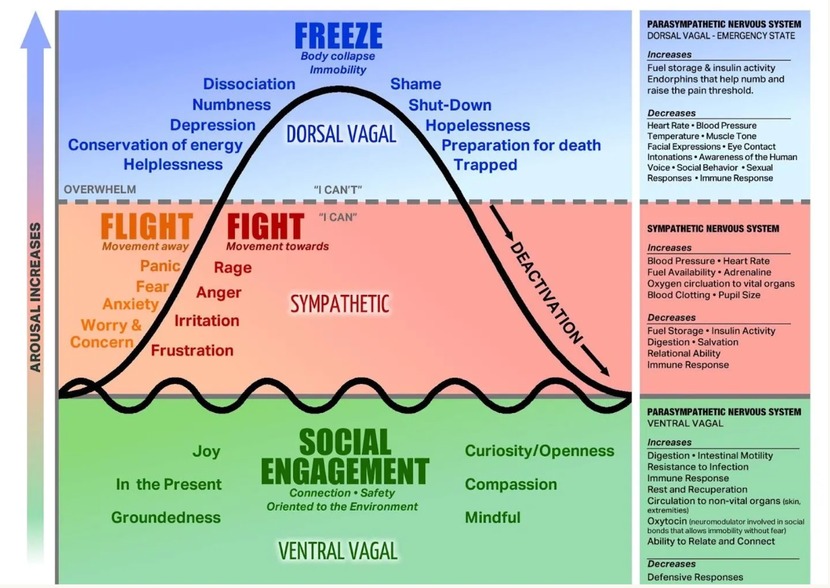
Chart of the three nervous system states: freeze at the top, fight or flight in the middle, and social engagement at the bottom, with the feelings and body changes linked to each
The three nervous system states, from calm and connected (bottom) to freeze (top).

Polyvagal theory is a helpful way to describe how stress feels. Researchers still debate some of its details.

Your gut and your brain

The vagus nerve

A long nerve that runs from your brain down through your chest to your gut. It carries signals in both directions and helps slow your heart rate and switch on digestion.

Think of it like

A two-way motorway between your brain and your body. It also carries the brake pedal that slows a racing heart.

Your gut and brain talk to each other all day, through the vagus nerve, hormones and the immune system. Long-term stress can change how your gut works and the bacteria that live in it, and an unsettled gut can feed back into mood, anxiety and sleep. Looking after one helps the other.

Sleep and your daily rhythm

Cortisol normally follows a daily rhythm: higher in the morning to help you wake, and lower at night so you can sleep. Ongoing stress can disturb that rhythm. Common signs are difficulty falling asleep, a “second wind” late at night, or waking in the early hours and struggling to settle again.

What helps

  • Breathe slowly, with a longer breath out than in. For example, in for 4, out for 6.
  • Hum or sing out loud for a few minutes. It may help settle your nervous system.
  • Splash cool water on your face. It can slow your heart rate. If you have a heart condition, check with your doctor first.
  • Move your body regularly, including some strength work.
  • Protect your sleep: keep regular times, have caffeine earlier in the day and wind down at night.
  • Eat regularly and look after your gut with plenty of plant foods.
  • Spend time with people who help you feel safe.
  • Pace your day, with short breaks between demanding tasks.

When to get help

If stress is affecting your sleep, mood, digestion or daily life for more than a few weeks, speak to your doctor or a mental health professional. Sudden weight loss, chest pain, fainting or very high blood pressure need medical attention. If you feel unsafe, or have thoughts of harming yourself, contact your doctor or local emergency services straight away.

Source

Concepts adapted from practitioner education material on allostatic load and the polyvagal framework.

General educational information from the practice — not personalised advice or a prescription. If anything is painful, stop. Book an appointment for guidance specific to you.

Ask Compass

Public resource

Understanding stress

How everyday stress builds up in the body, why recovery matters, and what you can do about it.

Stress isn’t always the enemy

Some stress is useful. A deadline, a workout or a new challenge can sharpen your focus and help you perform. The problems start when stress is constant and recovery doesn’t catch up.

  • Too little stress (underload) can leave you flat, low in morale and fatigued.
  • Healthy stress keeps you focused and motivated, and you recover well afterwards.
  • Too much stress (overload) leads to exhaustion and, eventually, breakdown.

Two words worth knowing

Allostasis

Your body’s way of staying steady while things change. When something stressful happens, your body adjusts — heart rate, hormones, energy supply — and then settles again.

Think of it like

A thermostat. When the room gets cold, the heating switches on. When it warms up, the heating switches off again. Your body keeps adjusting like this all day, so that everything stays in a comfortable range.

Allostatic load

The wear and tear that builds up when your body has to keep adjusting without enough time to recover. It is the accumulated strain of ongoing stress.

Think of it like

A car that is revved hard every day and never gets serviced. Any single rev is fine. It is the wear from thousands of revs, with no pit stop, that adds up.

Resilience

How well you adapt and bounce back. A resilient body adjusts to a stressor and returns to balance. When recovery falls behind, the load builds.

Think of it like

A tree in the wind. A flexible tree bends in a storm and springs back. A stiff, worn-out one is more likely to snap.

Whether something feels stressful depends on your past experiences, your genetics and your habits. That’s why the same event affects people so differently.

What happens in your body

Think of it like

A smoke alarm and a sprinkler system. The alarm (your brain) senses danger and the sprinklers (your adrenal glands) switch on. That is exactly what you want in a fire. It becomes a problem if the alarm keeps going off when there is no fire.

  1. Your brain senses a threat or a demand, real or perceived.
  2. Signals travel from the brain (the hypothalamus and pituitary) to the adrenal glands.
  3. The adrenal glands release stress hormones, including adrenaline and cortisol.
  4. Your heart rate, breathing and blood sugar rise, ready for action.
  5. When the demand passes, the system should switch off and recovery begins.

Cortisol

A hormone that helps you cope with demands. It raises your energy, sharpens your alertness and keeps inflammation in check.

Think of it like

A night watchman. Great when on duty during a threat, but exhausting if he is never allowed to go off shift.

Cortisol helps you cope in the short term. The trouble starts when the stress response stays switched on, or its daily rhythm stays off, for a long time. Long-term stress is linked to inflammation, poorer sleep, digestive upset, and changes in blood pressure and blood sugar.

Graph comparing normal stress, with short peaks that return to calm, against prolonged stress, which stays in a constantly heightened fight, flight or freeze state
Normal stress rises and settles back to calm. With prolonged stress, the body stays in a heightened state.

How stress load can show up

Stress load doesn’t look the same in everyone. Common signs include:

  • Feeling wired, anxious, irritable or overwhelmed
  • Trouble concentrating, or feeling flat and unmotivated
  • Clenching or grinding your jaw, and tense neck and shoulders
  • Headaches
  • Digestive upset, or changes in appetite
  • Trouble falling or staying asleep, or waking tired
  • Cravings and energy crashes through the day
  • Getting sick more often than usual

These signs have many possible causes, and none of them diagnoses stress on its own.

How it is measured

Clinicians and researchers look at several things together: blood pressure and resting heart rate, waist-to-hip ratio, blood sugar and cholesterol, markers of inflammation such as CRP, and stress hormones such as cortisol. Questionnaires about symptoms add the picture. The more of these that are out of range, the higher the load is likely to be.

The three states of your nervous system

The polyvagal framework describes three broad states your nervous system moves between. It is normal to shift between them. The aim is to spend most of your time in the first.

Think of it like

Driving a car. Rest and connect is cruising along comfortably. Fight or flight is flooring the accelerator. Freeze is the engine stalling, or the handbrake being left on. A healthy driver uses all three at times, but spends most of the journey cruising.

  • Rest and connect (social engagement): you feel calm, curious and present. Digestion, immunity and recovery work well.
  • Fight or flight: you feel anxious, irritable, angry or panicky. Heart rate, blood pressure and muscle tension rise, and digestion slows.
  • Freeze (shut-down): you feel numb, hopeless, disconnected or exhausted.
Chart of the three nervous system states: freeze at the top, fight or flight in the middle, and social engagement at the bottom, with the feelings and body changes linked to each
The three nervous system states, from calm and connected (bottom) to freeze (top).

Polyvagal theory is a helpful way to describe how stress feels. Researchers still debate some of its details.

Your gut and your brain

The vagus nerve

A long nerve that runs from your brain down through your chest to your gut. It carries signals in both directions and helps slow your heart rate and switch on digestion.

Think of it like

A two-way motorway between your brain and your body. It also carries the brake pedal that slows a racing heart.

Your gut and brain talk to each other all day, through the vagus nerve, hormones and the immune system. Long-term stress can change how your gut works and the bacteria that live in it, and an unsettled gut can feed back into mood, anxiety and sleep. Looking after one helps the other.

Sleep and your daily rhythm

Cortisol normally follows a daily rhythm: higher in the morning to help you wake, and lower at night so you can sleep. Ongoing stress can disturb that rhythm. Common signs are difficulty falling asleep, a “second wind” late at night, or waking in the early hours and struggling to settle again.

What helps

  • Breathe slowly, with a longer breath out than in. For example, in for 4, out for 6.
  • Hum or sing out loud for a few minutes. It may help settle your nervous system.
  • Splash cool water on your face. It can slow your heart rate. If you have a heart condition, check with your doctor first.
  • Move your body regularly, including some strength work.
  • Protect your sleep: keep regular times, have caffeine earlier in the day and wind down at night.
  • Eat regularly and look after your gut with plenty of plant foods.
  • Spend time with people who help you feel safe.
  • Pace your day, with short breaks between demanding tasks.

When to get help

If stress is affecting your sleep, mood, digestion or daily life for more than a few weeks, speak to your doctor or a mental health professional. Sudden weight loss, chest pain, fainting or very high blood pressure need medical attention. If you feel unsafe, or have thoughts of harming yourself, contact your doctor or local emergency services straight away.

Source

Concepts adapted from practitioner education material on allostatic load and the polyvagal framework.

General educational information from the practice — not personalised advice or a prescription. If anything is painful, stop. Book an appointment for guidance specific to you.