COMPASS

Public resource

Achilles Tendon Care

The Achilles is the thick tendon at the back of your ankle. It handles some of the biggest loads in the body, and when it becomes irritated it can be slow to settle. Gradual, well-planned loading is usually part of the answer.

What is the Achilles tendon?

The Achilles tendon joins your calf muscles to your heel bone. Every step, hill, stair and jump pulls through it. Tendon pain (often called tendinopathy) tends to build up when load rises faster than the tendon can adapt.
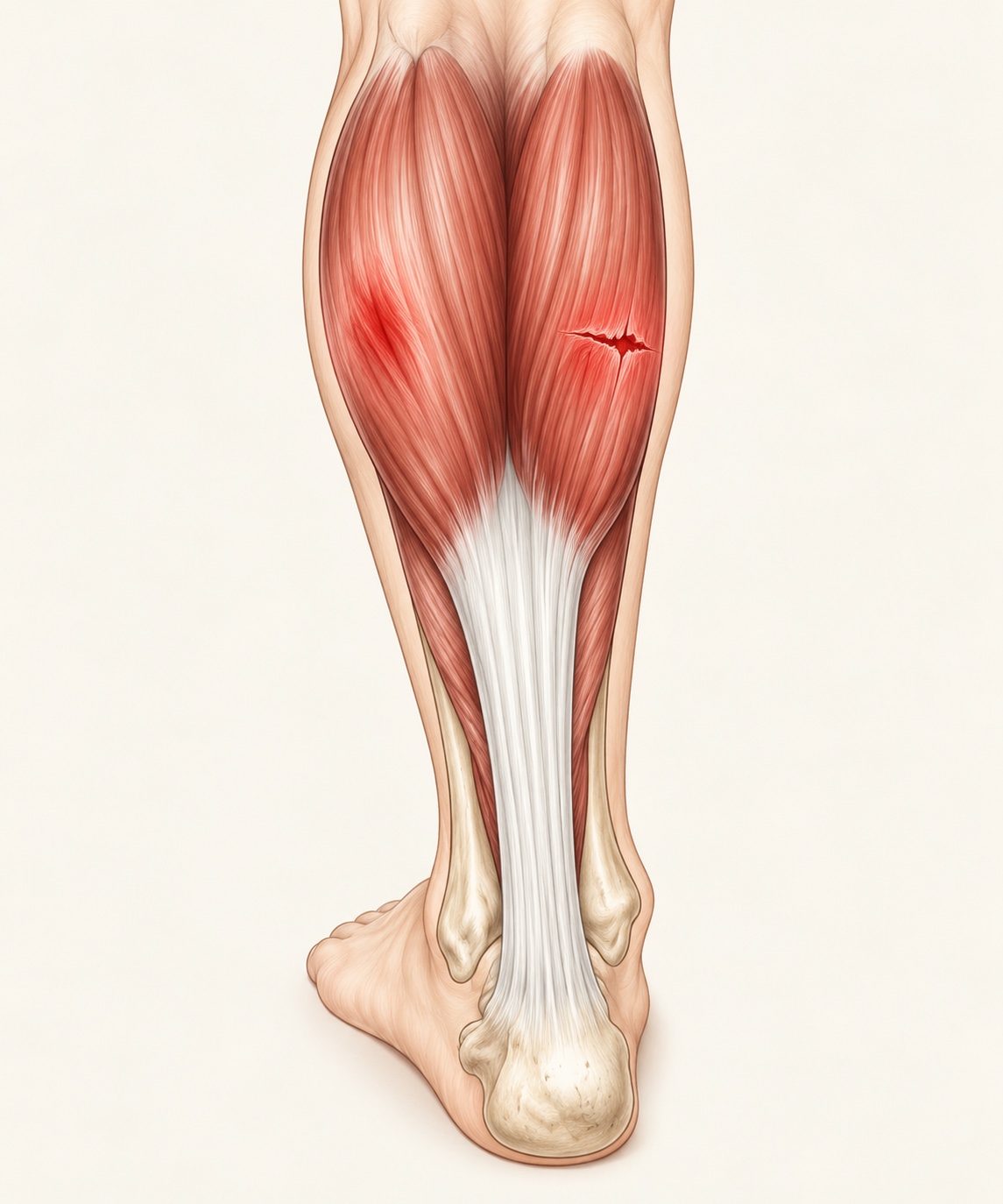
The calf muscles joining the Achilles tendon above the heel bone

Common signs

  • Stiffness or aching at the back of the heel or lower calf, often worst first thing in the morning
  • Pain at the start of a walk or run that eases, then returns afterwards
  • A tender, thickened spot on the tendon, or pain right where it meets the heel
  • Pain on stairs, hills, jumping or pushing off
  • Reduced calf strength compared with the other side

Two common types

Mid-portion tendon pain sits a few centimetres above the heel. Insertional pain sits right where the tendon attaches to the heel bone. The two respond best to slightly different loading, which is one reason an assessment is worthwhile.

Key principles

  • Load, do not simply rest. Tendons usually respond better to carefully progressed loading than to complete rest.
  • Let pain guide you. Mild discomfort (about 3 out of 10 or less) that settles by the next morning is generally acceptable. Stop if it climbs.
  • Build up gradually. Increase training, hills and speed in small steps, not sudden jumps.
  • Be patient and consistent. Tendons adapt slowly. Improvement is usually measured in weeks, not days.

Exercises

Do these as part of a plan, not all at once. Stay within mild discomfort and stop if pain sharpens.

1. Isometric calf hold

Stand and rise onto both toes, then hold the top position without moving. Many people find this settles pain before they can tolerate movement.

Hold 30–45 seconds

Reps 3–5

Use Once or twice a day while the tendon is irritable

Progression Hold on one leg.

2. Slow heel raises

Rise up onto your toes, then lower slowly over about three seconds. Keep your weight over the big toe side of your foot.

Reps 10–15

Sets 3

Frequency Once a day, building towards every second day

Progression Move to one leg, then add a light backpack.

3. Bent-knee heel raises

With your knees slightly bent, rise and lower slowly. This shifts more work to the deeper soleus muscle that helps share the load.

Reps 10–15

Sets 3

Progression One leg at a time.

4. Calf stretches

Stretch with the knee straight, then with the knee bent, with your heel on the floor.

Hold 30 seconds

Reps 3 each position

5. Insertional pain: keep your heel level

If pain sits at the heel, do heel raises on flat ground and avoid letting the heel drop below the edge of a step, which compresses the tendon.

Tip Check with your chiropractor which version suits you.

Daily habits that help

  • Warm up with a few minutes of walking and calf raises before activity
  • Wear supportive, cushioned shoes and avoid going barefoot on hard floors while it is sore
  • Raise training load by no more than about 10% a week
  • Strengthen the calf, foot and hip muscles year-round, not only when it hurts
  • Allow recovery days after hills, speed work and jumping

Red flags: get checked promptly

  • A sudden pop or a feeling of being kicked at the back of the heel
  • Difficulty rising onto your toes, or pushing off, on one leg
  • Significant swelling, bruising or a gap you can feel in the tendon
  • Calf pain with swelling, warmth or redness in one leg
  • Constant pain at rest or at night
  • Recent steroid injection near the tendon, or certain antibiotics (fluoroquinolones), together with new tendon pain

References

This guide draws on the published sources below. They are listed for further reading and do not replace an assessment.

  1. Silbernagel KG, Hanlon S, Sprague A. Current clinical concepts: conservative management of Achilles tendinopathy. J Athl Train. 2020;55(5):438–447. Source
  2. Martin RL, Chimenti R, Cuddeford T, et al. Achilles pain, stiffness, and muscle power deficits: midportion Achilles tendinopathy revision 2018. J Orthop Sports Phys Ther. 2018;48(5):A1–A38. Source
  3. Beyer R, Kongsgaard M, Hougs Kjær B, et al. Heavy slow resistance versus eccentric training as treatment for Achilles tendinopathy: a randomized controlled trial. Am J Sports Med. 2015;43(7):1704–1711. Source
  4. Jonsson P, Alfredson H, Sunding K, Fahlström M, Cook J. New regimen for eccentric calf-muscle training in patients with chronic insertional Achilles tendinopathy: results of a pilot study. Br J Sports Med. 2008;42(9):746–749. Source
  5. van der Linden PD, Sturkenboom MCJM, Herings RMC, Leufkens HGM, Stricker BHC. Fluoroquinolones and risk of Achilles tendon disorders: case-control study. BMJ. 2002;324:1306–1307. Source

Related

General educational information from the practice — not personalised advice or a prescription. If anything is painful, stop. Book an appointment for guidance specific to you.

Ask Compass

Public resource

Achilles Tendon Care

The Achilles is the thick tendon at the back of your ankle. It handles some of the biggest loads in the body, and when it becomes irritated it can be slow to settle. Gradual, well-planned loading is usually part of the answer.

What is the Achilles tendon?

The Achilles tendon joins your calf muscles to your heel bone. Every step, hill, stair and jump pulls through it. Tendon pain (often called tendinopathy) tends to build up when load rises faster than the tendon can adapt.

The calf muscles joining the Achilles tendon above the heel bone

Common signs

  • Stiffness or aching at the back of the heel or lower calf, often worst first thing in the morning
  • Pain at the start of a walk or run that eases, then returns afterwards
  • A tender, thickened spot on the tendon, or pain right where it meets the heel
  • Pain on stairs, hills, jumping or pushing off
  • Reduced calf strength compared with the other side

Two common types

Mid-portion tendon pain sits a few centimetres above the heel. Insertional pain sits right where the tendon attaches to the heel bone. The two respond best to slightly different loading, which is one reason an assessment is worthwhile.

Key principles

  • Load, do not simply rest. Tendons usually respond better to carefully progressed loading than to complete rest.
  • Let pain guide you. Mild discomfort (about 3 out of 10 or less) that settles by the next morning is generally acceptable. Stop if it climbs.
  • Build up gradually. Increase training, hills and speed in small steps, not sudden jumps.
  • Be patient and consistent. Tendons adapt slowly. Improvement is usually measured in weeks, not days.

Exercises

Do these as part of a plan, not all at once. Stay within mild discomfort and stop if pain sharpens.

1. Isometric calf hold

Stand and rise onto both toes, then hold the top position without moving. Many people find this settles pain before they can tolerate movement.

Hold 30–45 seconds

Reps 3–5

Use Once or twice a day while the tendon is irritable

Progression Hold on one leg.

2. Slow heel raises

Rise up onto your toes, then lower slowly over about three seconds. Keep your weight over the big toe side of your foot.

Reps 10–15

Sets 3

Frequency Once a day, building towards every second day

Progression Move to one leg, then add a light backpack.

3. Bent-knee heel raises

With your knees slightly bent, rise and lower slowly. This shifts more work to the deeper soleus muscle that helps share the load.

Reps 10–15

Sets 3

Progression One leg at a time.

4. Calf stretches

Stretch with the knee straight, then with the knee bent, with your heel on the floor.

Hold 30 seconds

Reps 3 each position

5. Insertional pain: keep your heel level

If pain sits at the heel, do heel raises on flat ground and avoid letting the heel drop below the edge of a step, which compresses the tendon.

Tip Check with your chiropractor which version suits you.

Daily habits that help

  • Warm up with a few minutes of walking and calf raises before activity
  • Wear supportive, cushioned shoes and avoid going barefoot on hard floors while it is sore
  • Raise training load by no more than about 10% a week
  • Strengthen the calf, foot and hip muscles year-round, not only when it hurts
  • Allow recovery days after hills, speed work and jumping

Red flags: get checked promptly

  • A sudden pop or a feeling of being kicked at the back of the heel
  • Difficulty rising onto your toes, or pushing off, on one leg
  • Significant swelling, bruising or a gap you can feel in the tendon
  • Calf pain with swelling, warmth or redness in one leg
  • Constant pain at rest or at night
  • Recent steroid injection near the tendon, or certain antibiotics (fluoroquinolones), together with new tendon pain

References

This guide draws on the published sources below. They are listed for further reading and do not replace an assessment.

  1. Silbernagel KG, Hanlon S, Sprague A. Current clinical concepts: conservative management of Achilles tendinopathy. J Athl Train. 2020;55(5):438–447. Source
  2. Martin RL, Chimenti R, Cuddeford T, et al. Achilles pain, stiffness, and muscle power deficits: midportion Achilles tendinopathy revision 2018. J Orthop Sports Phys Ther. 2018;48(5):A1–A38. Source
  3. Beyer R, Kongsgaard M, Hougs Kjær B, et al. Heavy slow resistance versus eccentric training as treatment for Achilles tendinopathy: a randomized controlled trial. Am J Sports Med. 2015;43(7):1704–1711. Source
  4. Jonsson P, Alfredson H, Sunding K, Fahlström M, Cook J. New regimen for eccentric calf-muscle training in patients with chronic insertional Achilles tendinopathy: results of a pilot study. Br J Sports Med. 2008;42(9):746–749. Source
  5. van der Linden PD, Sturkenboom MCJM, Herings RMC, Leufkens HGM, Stricker BHC. Fluoroquinolones and risk of Achilles tendon disorders: case-control study. BMJ. 2002;324:1306–1307. Source

Related

General educational information from the practice — not personalised advice or a prescription. If anything is painful, stop. Book an appointment for guidance specific to you.