Public resource
Calf Strain & Tightness
Your calf takes load with every step. Tightness, cramps and strains are common, especially when training ramps up quickly. Most settle well with the right mix of movement, stretching and gradual strengthening.
What is the calf?
The calf is made of two main muscles. The gastrocnemius is the larger, visible muscle that crosses the knee and the ankle. The soleus lies underneath and works hardest when the knee is bent. Both join the Achilles tendon at the heel.
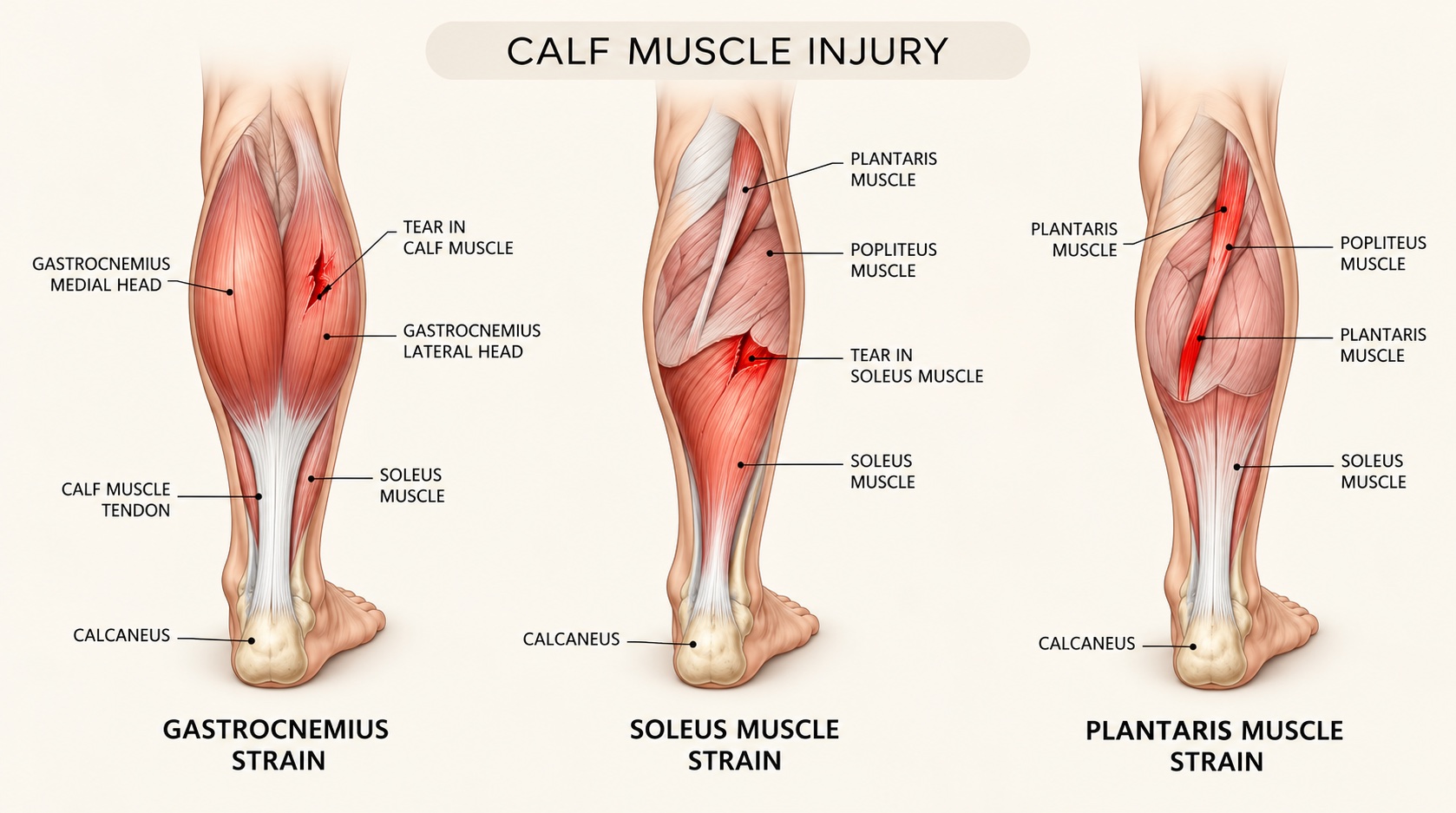
Tightness, cramp or strain?
- Tightness. A pulling or stretched feeling that eases with warming up and gentle stretching.
- Cramp. A sudden, intense muscle spasm that usually passes within minutes.
- Strain. A sudden sharp pain, often when sprinting or pushing off, sometimes with bruising, swelling and pain when walking.
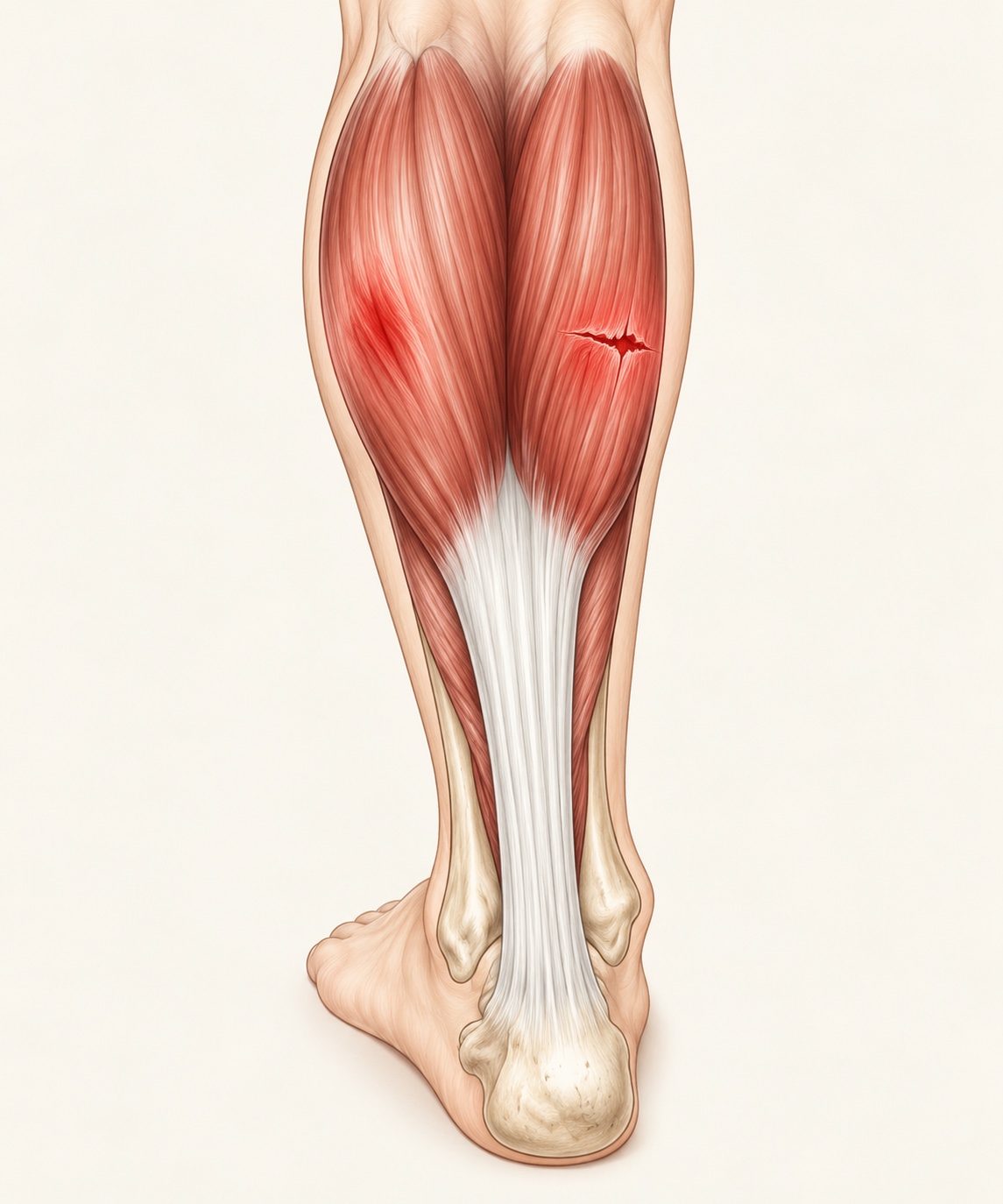
Common signs
- Tight, achy or stiff calves, especially after sitting or in the morning
- Pain when rising onto your toes, walking briskly or running
- Swelling or bruising in the lower leg after a sudden pain
- Cramping, particularly at night or during long efforts
- Heel or Achilles discomfort alongside tight calves
Key principles
- Keep moving gently. Early, comfortable walking is usually better than complete rest.
- Respect pain. Stay within mild discomfort and stop if it sharpens.
- Rebuild strength. Stretching alone is rarely enough. Calf strength protects against repeat strains.
- Return gradually. Build walking, then jogging, then speed in small steps.
Exercises
Start with the gentle options and move on as comfort allows. Stop if pain sharpens.
1. Straight-knee calf stretch
Stand facing a wall with one leg back, heel down and knee straight. Lean forward until you feel a stretch in the upper calf.
Hold 30 seconds
Reps 3 each leg
Progression Step further back, or drop the heel off a step.
2. Bent-knee calf stretch
From the same position, bend the back knee slightly while keeping the heel down. You should feel the stretch lower in the calf.
Hold 30 seconds
Reps 3 each leg
3. Calf raises
Rise onto both toes, pause, then lower slowly.
Reps 10–15
Sets 2–3
Progression Move to one leg, then add weight.
4. Seated calf raises
Sit with your knees bent to 90 degrees and lift your heels. This works the soleus muscle in particular.
Reps 12–15
Sets 2–3
Progression Rest a light weight on your knees.
5. Gentle soft tissue release
Use your hands or a soft ball to apply comfortable pressure along the calf. Avoid pressing hard on any tender or bruised area.
Time 1–2 minutes per leg
Return to running and sport
- Walking comfortably and without a limp
- Single-leg calf raises that feel strong and pain-free
- Brisk walking, then short jog intervals, before building up
- Pain-free hopping before sprinting or jumping
Daily habits that help
- Warm up before exercise, and cool down with gentle walking
- Stay well hydrated and keep up your electrolytes in hot weather or long efforts
- Wear supportive shoes, and vary heel heights if your calves are tight
- Break up long periods of sitting with short walks
- Build training load gradually
Red flags: get checked promptly
- Swelling, warmth or redness in one calf, especially after a long flight or period of immobility
- A sudden pop at the back of the lower leg, or difficulty pushing off
- Calf pain with chest pain or shortness of breath. Seek emergency care.
- Numbness, pins and needles or a cold, pale foot
- Pain at rest that is not settling, or severe unexplained cramping
References
This guide draws on the published sources below. They are listed for further reading and do not replace an assessment.
- Green B, Pizzari T. Calf muscle strain injuries in sport: a systematic review of risk factors for injury. Br J Sports Med. 2017;51(16):1189–1194. Source
- Dixon JB. Gastrocnemius vs. soleus strain: how to differentiate and deal with calf muscle injuries. Curr Rev Musculoskelet Med. 2009;2(2):74–77. Source
- Maughan RJ, Shirreffs SM. Muscle cramping during exercise: causes, solutions, and questions remaining. Sports Med. 2019;49(Suppl 2):115–124. Source
Related
General educational information from the practice — not personalised advice or a prescription. If anything is painful, stop. Book an appointment for guidance specific to you.